Jan 23, 2026
Industrial Exoskeletons in Distribution Centers
Découvrez comment les exosquelettes industriels aident à réduire la fatigue, à prévenir les blessures et à protéger votre main-d'œuvre dans les environnements de distribution et de logistique.
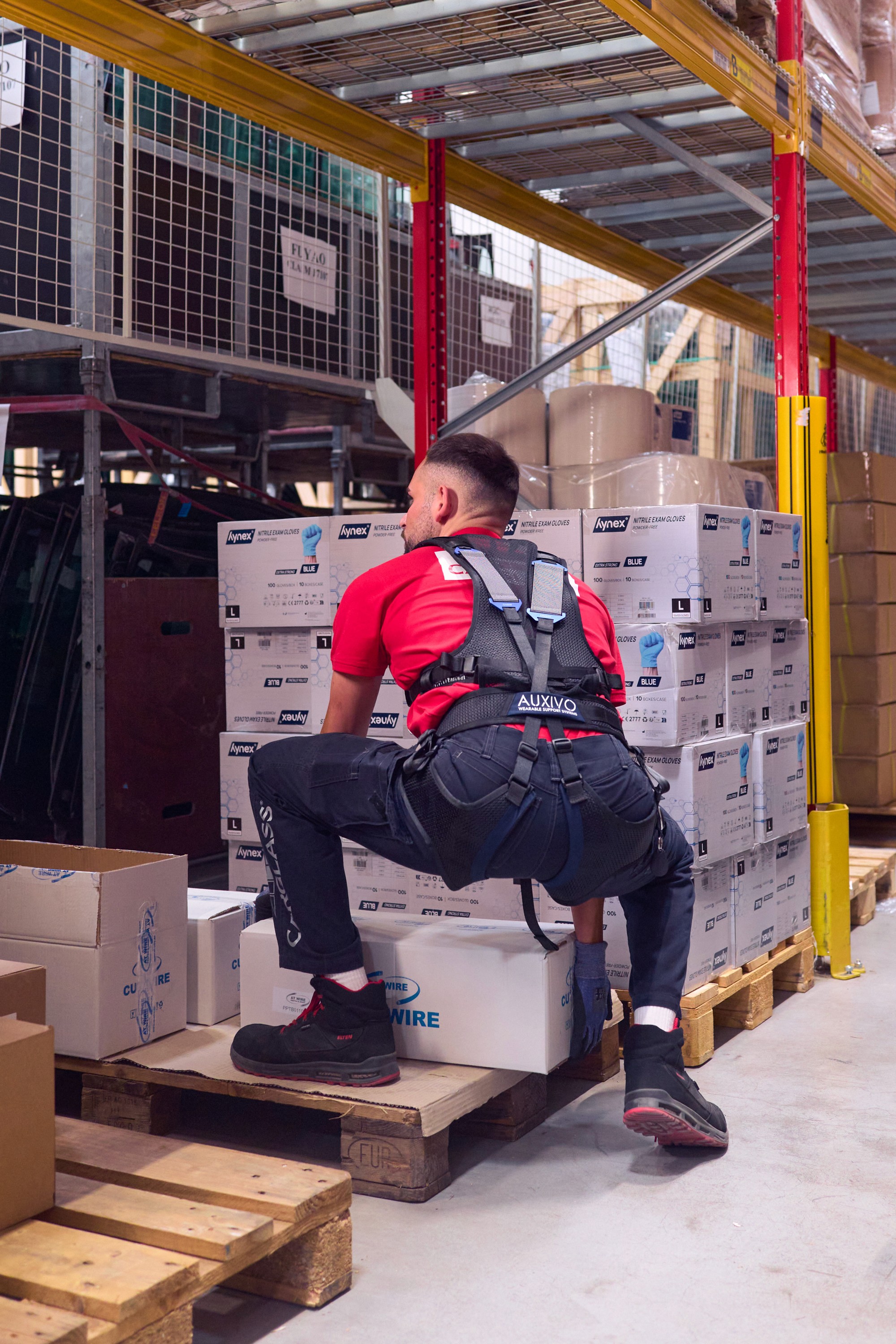
In distribution centers, efficiency depends on people. Skilled workers keep goods moving, orders fulfilled, and operations running smoothly. Yet these same workers are often exposed to repetitive motions, awkward postures, and physically demanding tasks that can lead to fatigue, pain, and musculoskeletal disorders (MSDs).
Over time, these strains don’t just affect employees, they impact productivity, absenteeism, and operational continuity.
The Hidden Cost of Physical Strain
Manual handling, lifting, prolonged standing, bending, and repetitive movements are part of daily life in distribution and logistics environments. Even when tasks are done correctly, cumulative physical load can result in:
Muscle fatigue
Lower back strain
Shoulder and joint pain
Increased risk of work-related injuries
These issues often develop gradually, making them harder to detect until they lead to lost time, compensation claims, or workforce turnover.
Industrial Exoskeletons: A Preventive Approach
Industrial exoskeletons offer a practical and proactive solution to reduce physical strain at the source. Rather than replacing workers or changing workflows entirely, exoskeletons support the body during demanding tasks.
In distribution centers, exoskeletons can help to:
✔ Reduce muscle fatigue during repetitive tasks
✔ Lower strain on the lower back during lifting and bending
✔ Support shoulders and arms during extended handling
✔ Prevent injuries before they occur
✔ Maintain long-term productivity and worker comfort
By assisting natural movement, exoskeletons allow employees to work more comfortably without restricting mobility.
Prevention as Part of Daily Operations
Traditionally, injury prevention has focused on training, job rotation, and ergonomics assessments. While these remain essential, wearable support technologies add an extra layer of protection, especially for high-frequency, physically demanding tasks.
Integrating exoskeletons into daily workflows can:
Reduce fatigue over the course of a shift
Improve task tolerance for experienced workers
Support an aging workforce
Increase employee retention and job satisfaction
Most importantly, prevention becomes continuous, not reactive.
Protecting People Protects Operations
When workers feel supported, they can focus on performance instead of discomfort. Fewer injuries mean fewer disruptions, lower costs, and a more resilient operation.
Protecting your workforce is not just a health and safety initiative, it’s a strategic investment.
What if prevention became part of your daily workflow? Industrial exoskeletons make that possible!
Interested in learning more?
If you’d like to see how industrial exoskeletons could fit into your operations, contact us to schedule a demonstration or get more information.
Visit our website!
In distribution centers, efficiency depends on people. Skilled workers keep goods moving, orders fulfilled, and operations running smoothly. Yet these same workers are often exposed to repetitive motions, awkward postures, and physically demanding tasks that can lead to fatigue, pain, and musculoskeletal disorders (MSDs).
Over time, these strains don’t just affect employees, they impact productivity, absenteeism, and operational continuity.
The Hidden Cost of Physical Strain
Manual handling, lifting, prolonged standing, bending, and repetitive movements are part of daily life in distribution and logistics environments. Even when tasks are done correctly, cumulative physical load can result in:
Muscle fatigue
Lower back strain
Shoulder and joint pain
Increased risk of work-related injuries
These issues often develop gradually, making them harder to detect until they lead to lost time, compensation claims, or workforce turnover.
Industrial Exoskeletons: A Preventive Approach
Industrial exoskeletons offer a practical and proactive solution to reduce physical strain at the source. Rather than replacing workers or changing workflows entirely, exoskeletons support the body during demanding tasks.
In distribution centers, exoskeletons can help to:
✔ Reduce muscle fatigue during repetitive tasks
✔ Lower strain on the lower back during lifting and bending
✔ Support shoulders and arms during extended handling
✔ Prevent injuries before they occur
✔ Maintain long-term productivity and worker comfort
By assisting natural movement, exoskeletons allow employees to work more comfortably without restricting mobility.
Prevention as Part of Daily Operations
Traditionally, injury prevention has focused on training, job rotation, and ergonomics assessments. While these remain essential, wearable support technologies add an extra layer of protection, especially for high-frequency, physically demanding tasks.
Integrating exoskeletons into daily workflows can:
Reduce fatigue over the course of a shift
Improve task tolerance for experienced workers
Support an aging workforce
Increase employee retention and job satisfaction
Most importantly, prevention becomes continuous, not reactive.
Protecting People Protects Operations
When workers feel supported, they can focus on performance instead of discomfort. Fewer injuries mean fewer disruptions, lower costs, and a more resilient operation.
Protecting your workforce is not just a health and safety initiative, it’s a strategic investment.
What if prevention became part of your daily workflow? Industrial exoskeletons make that possible!
Interested in learning more?
If you’d like to see how industrial exoskeletons could fit into your operations, contact us to schedule a demonstration or get more information.
Visit our website!
See other articles
Discover our articles and learn more about exoskeletons
See other articles
Discover our articles and learn more about exoskeletons
See other articles
Discover our articles and learn more about exoskeletons