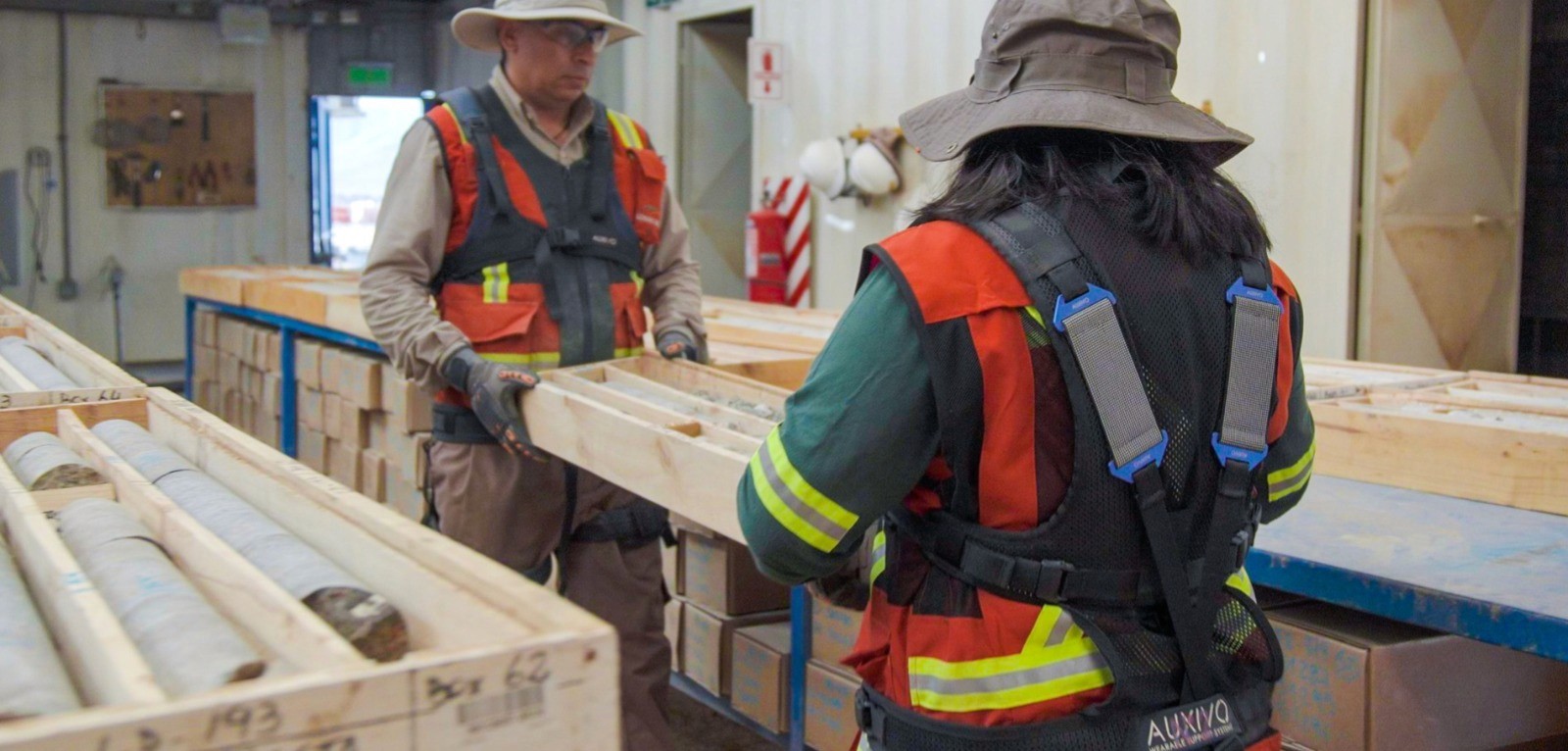
Reduce back constraints in the mining environment
Reduce fatigue and MSDs in mining environments with the LiftSuit, a lightweight lumbar exoskeleton that reduces back effort by up to 33%.
Portable exoskeleton providing motorized assistance for walking to reduce fatigue and support daily autonomy.

Mobility is a key factor in autonomy and quality of life. For individuals with multiple sclerosis (MS) or Parkinson's disease, walking, traveling long distances, or simply maintaining a daily level of activity can gradually become more demanding.
Muscle fatigue, weakness in the lower limbs, balance disorders, or slow movements often limit endurance and increase the risk of falling. These challenges can restrict mobility, reduce participation in social activities, and ultimately affect independence.
In this context, wearable assistive technologies, such as personal exoskeletons, offer new avenues to support mobility in a tangible and safe manner.
The Hypershell fits within this approach.
The Hypershell is a lightweight active exoskeleton worn around the waist and legs. With smart sensors, it detects the user's natural movements and provides synchronized motorized assistance with each step.
The device does not replace muscular effort but acts as a mechanical support that reduces the load placed on the legs. This assistance helps decrease fatigue, facilitates movement, and improves overall endurance while maintaining a natural gait.
Its portable and ergonomic design allows for use both indoors and outdoors, without altering walking habits.
Although each situation is unique, multiple sclerosis and Parkinson's disease often present similar motor limitations.
In the case of MS, muscle weakness, rapid fatigue, and reduced endurance make movement more energy-consuming. For individuals with Parkinson's, muscle stiffness, slow movements, and difficulty initiating walking can complicate everyday gestures.
These constraints frequently lead to a progressive reduction in physical activity, which can exacerbate muscle deconditioning and loss of autonomy.
External, discreet, and continuous support can then help compensate for part of this physical load.
By reducing the effort required with each step, the Hypershell can enable users to walk longer and with less exhaustion. Many individuals report a better tolerance for everyday activities, such as shopping, outings, or outdoor movement, as well as greater confidence in their movements.
This reduction in fatigue contributes not only to physical comfort but also to maintaining an active lifestyle, which is a key element for overall health and well-being.
The goal is not to perform better but to preserve autonomy and freedom of movement for as long as possible.
The Hypershell is not a medical treatment. It is a mechanical aid to mobility that complements existing care, such as physiotherapy, occupational therapy, or rehabilitation.
Its use can be considered within a comprehensive approach aimed at supporting function and participation in daily activities. A prior assessment with a healthcare professional is recommended to determine if this solution is suitable for the individual's capabilities and needs.
At Exoskeletons Canada, we support users and their families in evaluating mobility solutions tailored to their reality. Trials allow for concrete validation of comfort, fit, and potential benefits of the Hypershell.
Supporting walking, reducing fatigue, and preserving autonomy: small improvements that can make a big difference in daily life.
Is the Hypershell a medical device or a treatment for multiple sclerosis or Parkinson's?
No. The Hypershell is not a medical treatment. It is a mechanical aid to mobility that supports walking movements and reduces muscular effort. It complements care such as physiotherapy or rehabilitation without replacing them.
Does the exoskeleton replace a cane or walker?
Not necessarily. The Hypershell aims to assist the legs and decrease fatigue. Some individuals use it alone, while others combine it with a walking aid according to their level of stability and needs.
How can I determine if the Hypershell is suitable for my condition?
A trial remains the best way to assess it. Testing the device allows you to check comfort, fit, and actual benefits on fatigue and endurance. It is recommended to discuss this with a healthcare professional to determine if this solution meets your situation.
Reduce fatigue and MSDs in mining environments with the LiftSuit, a lightweight lumbar exoskeleton that reduces back effort by up to 33%.
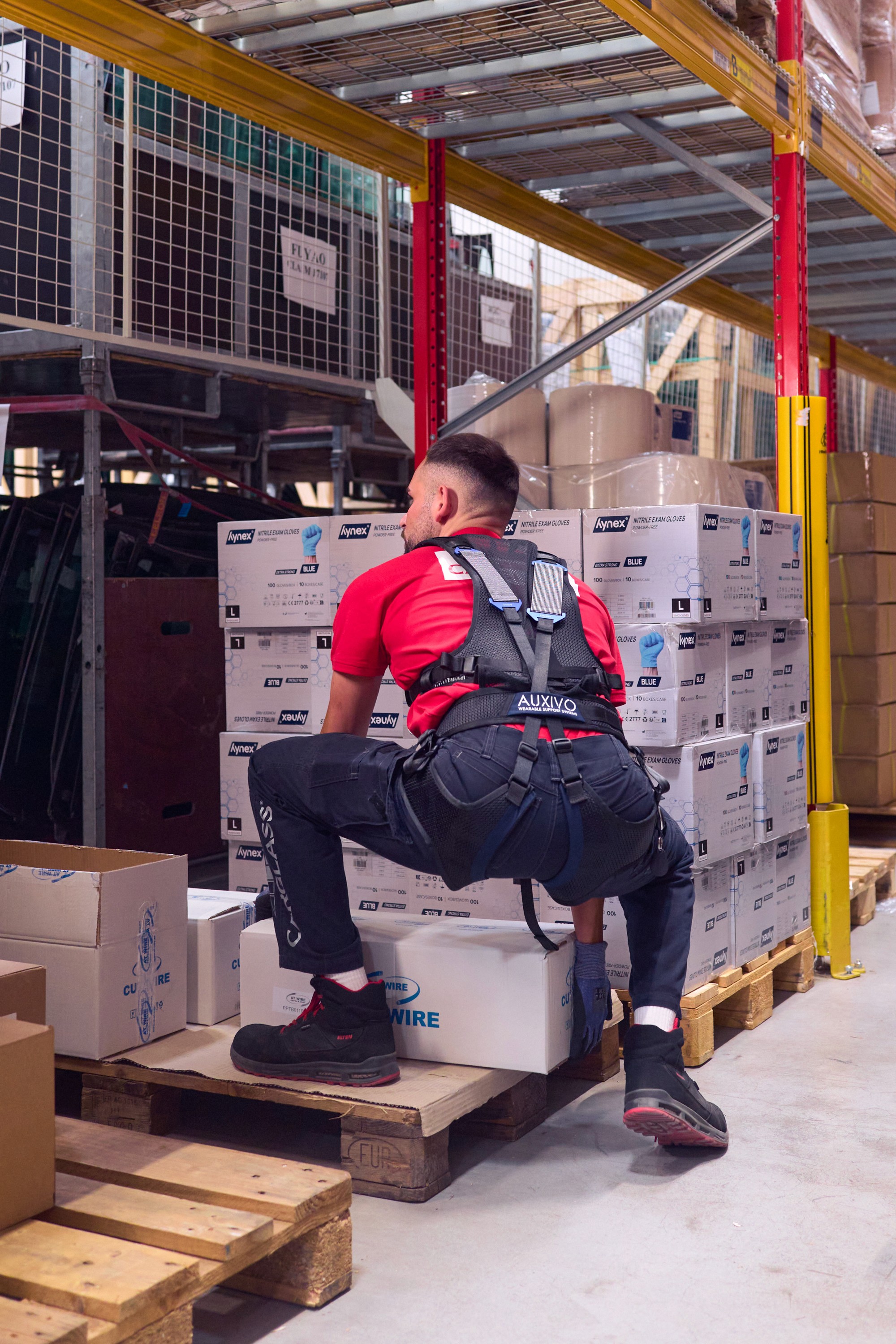
Discover how industrial exoskeletons help reduce fatigue, prevent injuries, and protect your workforce in distribution and logistics environments.