
Mobility assistance for MS and Parkinson's
Portable exoskeleton providing motorized assistance for walking to reduce fatigue and support daily autonomy.
Discover how a distribution company protected its workers and reduced its CNESST claims thanks to lumbar exoskeletons.
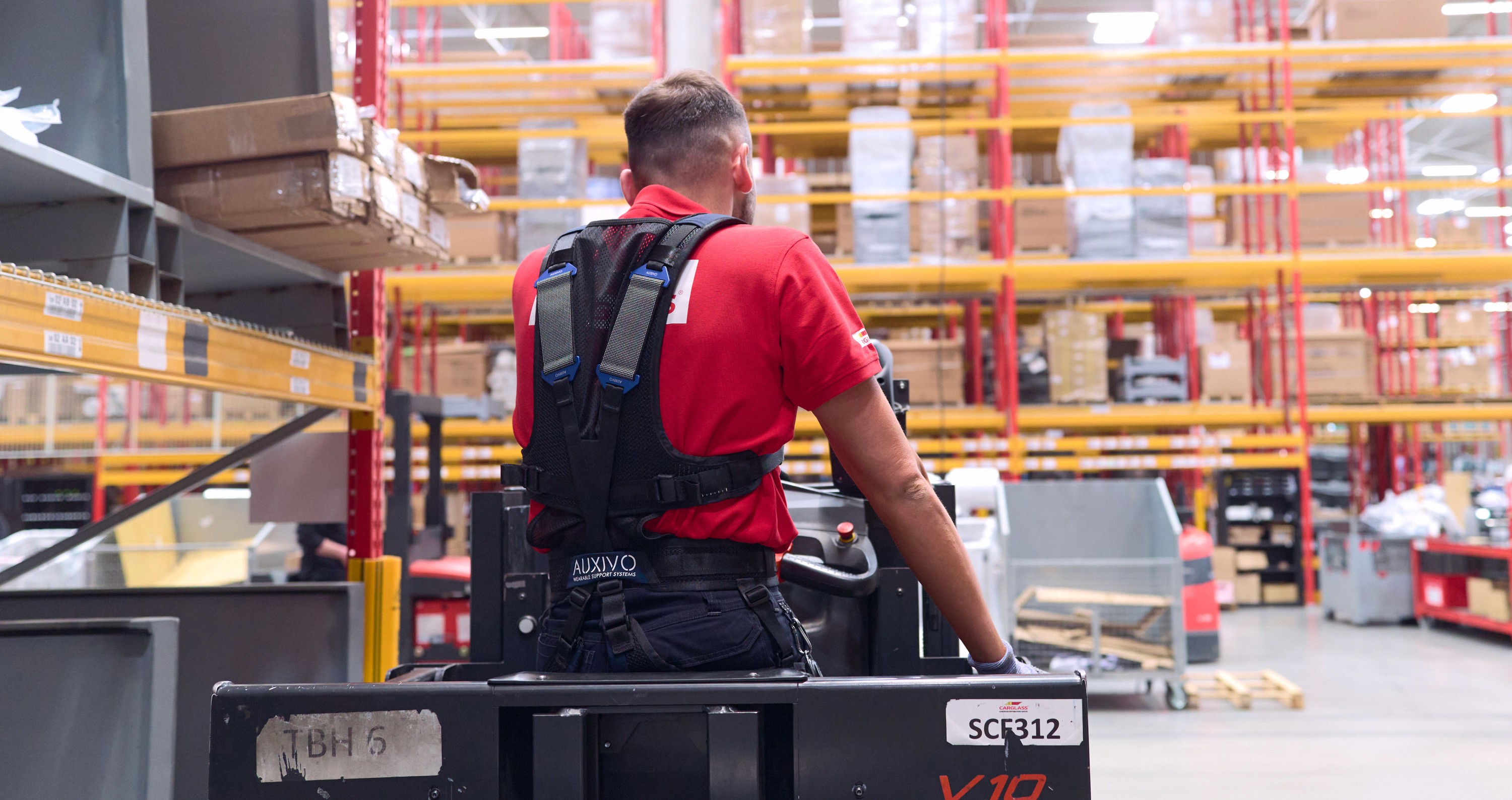
In a medium-sized distribution warehouse, workers lift, pivot, and carry loads all day long. Not in any dramatic way. Just dozens, sometimes hundreds, of times per shift.
It is precisely this kind of repetitive movement, without being forceful, that generates the most musculoskeletal disorders (MSDs). And the back pays the price.
For this client, the reality was clear: several CNESST claims per year, workers on extended leave, and growing pressure on the remaining teams. The cycle was worsening year after year.
3×the cost of an injury vs. the weekly salary | 40%of workplace injuries are MSDs in Quebec | 67days of absence on average for a back injury |
The operations director contacted us with a direct question: “Can an exoskeleton really make a difference in a warehouse?”
The short answer: yes. But not by magic—by using a structured approach.
Together, we identified the highest-risk positions: goods receiving, picking in low areas, and pallet loading. These are the three tasks where the back takes the biggest hit, often in awkward positions and under time pressure.
“We weren’t looking to replace our workers or completely change our processes. We just wanted to give them a tool so their bodies could go the distance.”
— Operations Director, distribution company
1. Job analysis
We started by observing the actual tasks on the floor, not just the job descriptions. Which movements come up most often? Where is the back most heavily used?
2. Selection of suitable exoskeletons
For handling and lifting tasks, we recommended lightweight, non-motorized lumbar support exoskeletons designed not to interfere with natural movement.
3. Trial period with the teams
Worker adoption is crucial. We ran a two-week trial with volunteers, gathered their feedback, and made adjustments before full deployment.
4. Deployment and monitoring
Gradual deployment in the targeted positions, accompanied by brief training. Tracking of indicators: claims, absenteeism, and qualitative feedback from the teams.
After six months of regular use, the results spoke for themselves. The number of back-related claims dropped significantly. But beyond the numbers, what workers reported matters most.
Less pain at the end of a shift. Fewer rough wake-ups the next day. A sense of better control over their own bodies in a demanding environment.
For the company, it is also a strong signal sent to the teams: their health is not a variable to be adjusted—it is a priority.
“At first, the guys were sceptical. Now, some refuse to work without them. That is the best proof that it works.”
— Warehouse Supervisor
Back injuries in a warehouse are not inevitable. They are often the result of movements repeated thousands of times, without adequate protection.
The good news: today, there are tools designed specifically for this, accessible, adoptable, and with a return on investment measured in months, not years.
The real question is not whether you can afford to invest in prevention. It is whether you can afford not to.
We can analyse your high-risk positions and propose a solution tailored to your on-the-ground reality. Contact us at exosquelettescanada.com
Portable exoskeleton providing motorized assistance for walking to reduce fatigue and support daily autonomy.
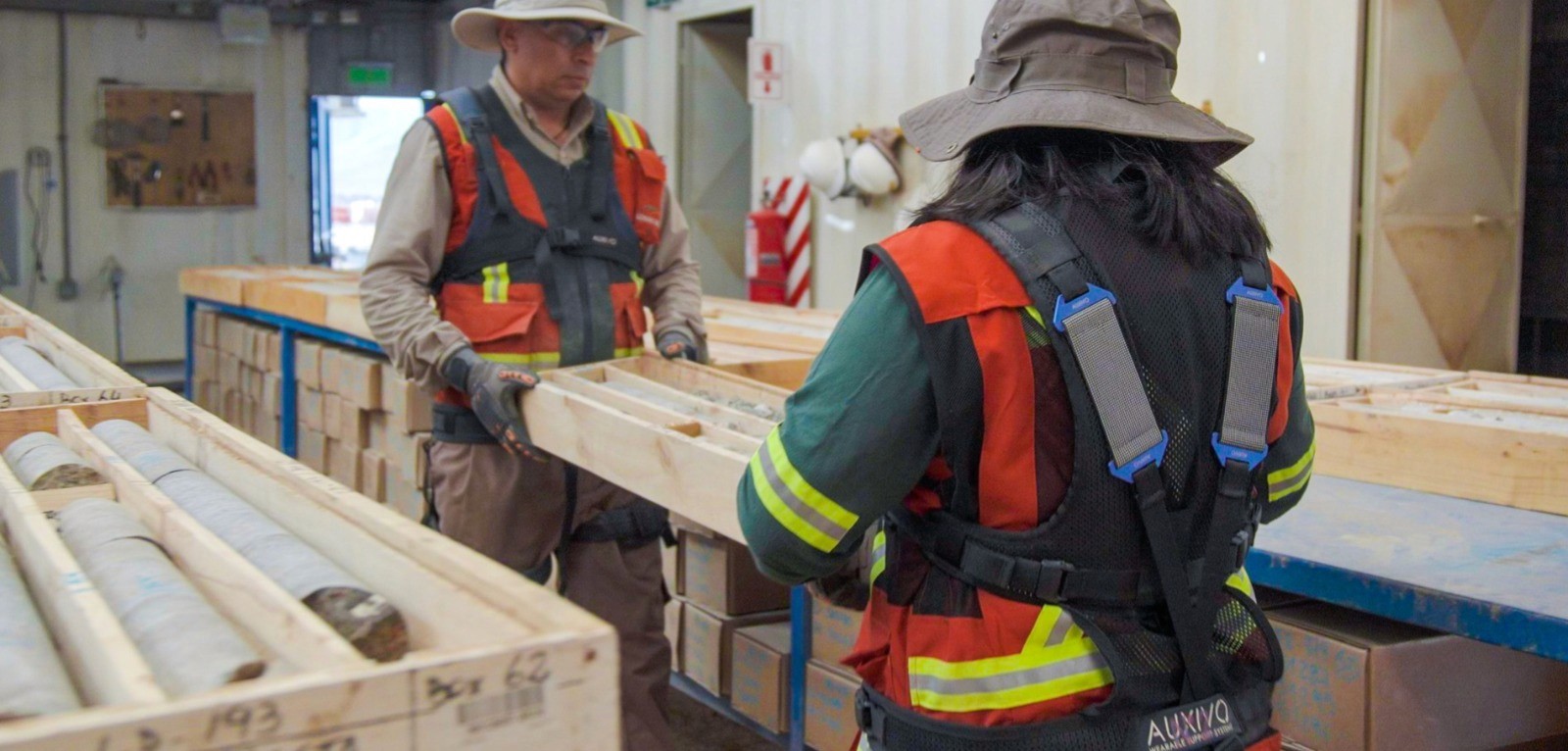
Reduce fatigue and MSDs in mining environments with the LiftSuit, a lightweight lumbar exoskeleton that reduces back effort by up to 33%.