
Mobility assistance for MS and Parkinson's
Portable exoskeleton providing motorized assistance for walking to reduce fatigue and support daily autonomy.
Discover how Auxivo's LiftSuit exoskeleton reduces fatigue, lower back pain, and the risk of injuries in warehouses across Canada.
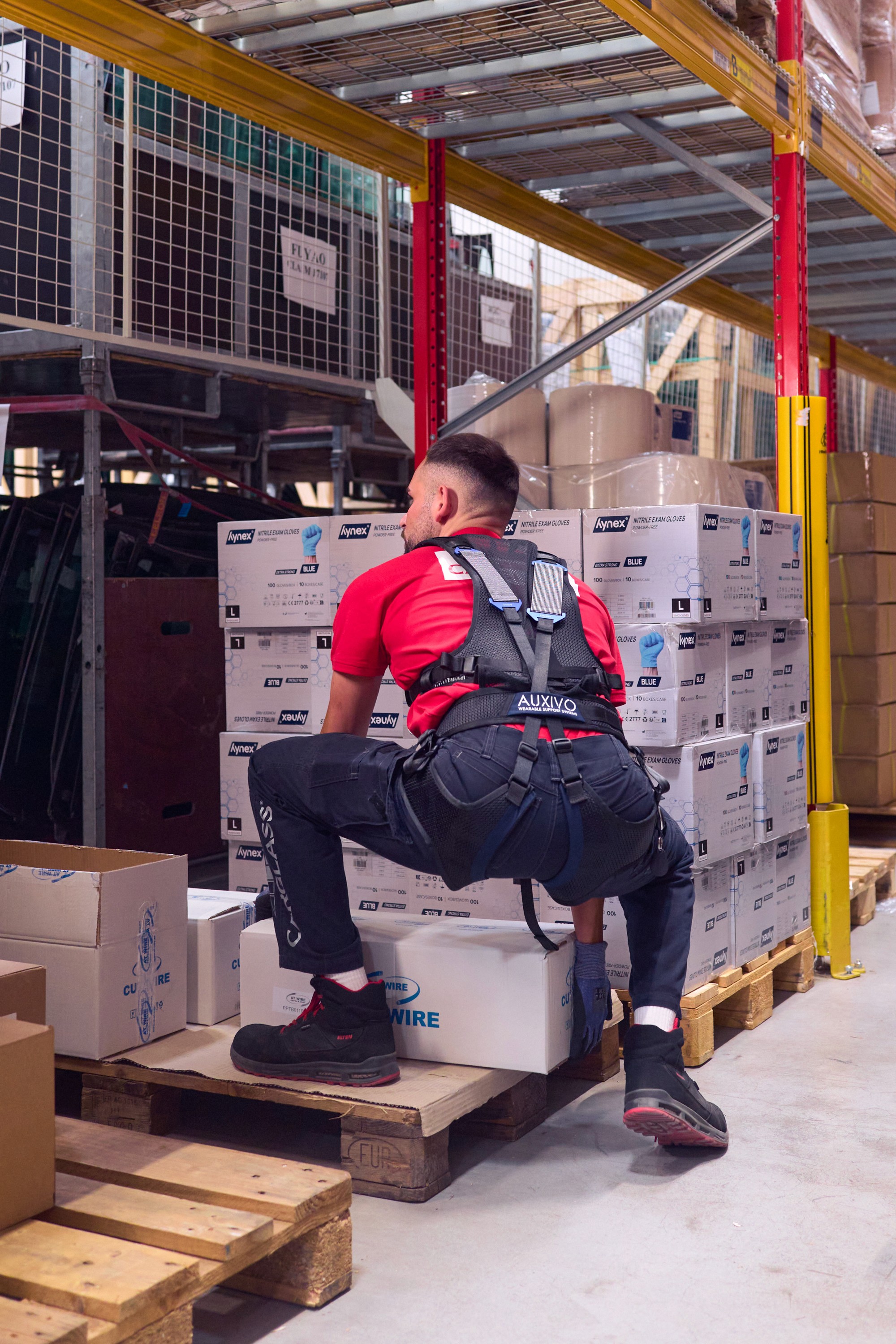
In many warehouses and distribution centers across Canada, workers handle heavy or bulky loads on a daily basis. These repetitive tasks require strength, precision, and endurance, which increases the risk of fatigue, lower back pain, and musculoskeletal disorders.
With the evolving operational requirements and workforce shortages, several Canadian companies are now adding industrial exoskeletons to their health and safety strategy.
Workers often have to:
lift between 15 and 25 kg repeatedly;
work in a forward bent position;
perform back twists;
repeat the same movements for 10 to 12 hours;
frequently move around the warehouse.
These constraints increase:
the load on the lumbar spine;
muscle fatigue;
lifting-related injuries;
costs associated with absences;
the difficulty of recruiting and retaining workforce.
In several projects conducted in Canada, the mainly used exoskeleton is the LiftSuit by Auxivo, a passive exoskeleton designed to:
reduce the load on the lower back;
support bending and lifting movements;
improve posture;
reduce fatigue during long days.
No battery or electronics (zero maintenance).
Ultralight and without heavy metal parts.
Worn in less than a minute.
Comfortable even over long periods.
Compatible with most warehouse tasks.
Real conditions evaluations have demonstrated significant benefits:
25% muscle activity in the lower back;
27% muscle fatigue speed;
28% perceived effort by workers;
7% average heart rate during demanding tasks.
Employees also report:
less pain at the end of shifts;
better overall comfort;
more stable posture when lifting;
greater energy throughout the day.
Canadian companies that have successfully adopted exoskeletons follow a structured approach:
Employees discover the technology together, which reduces initial resistance.
Each exoskeleton is configured according to morphology and tasks.
Regular feedback allows for improved usage and adoption.
Start with a few units, then scale up based on needs.
Since the introduction of exoskeletons, several companies have observed:
a notable reduction in lower back pain;
a decrease in the risk of injuries;
better endurance of workers;
a decrease in physical limitations at the end of the day;
essential support for aging workers.
For many employees, the exoskeleton quickly becomes an indispensable tool.
In Canada, exoskeletons are now integrated as a complementary tool to a comprehensive ergonomics and prevention strategy:
training in safe lifting;
optimization of workstations;
health and wellness programs;
strategic task rotation;
ongoing ergonomic analysis.
The common goal:
keep employees healthy, reduce fatigue, and extend work capacity in high handling environments.
Portable exoskeleton providing motorized assistance for walking to reduce fatigue and support daily autonomy.
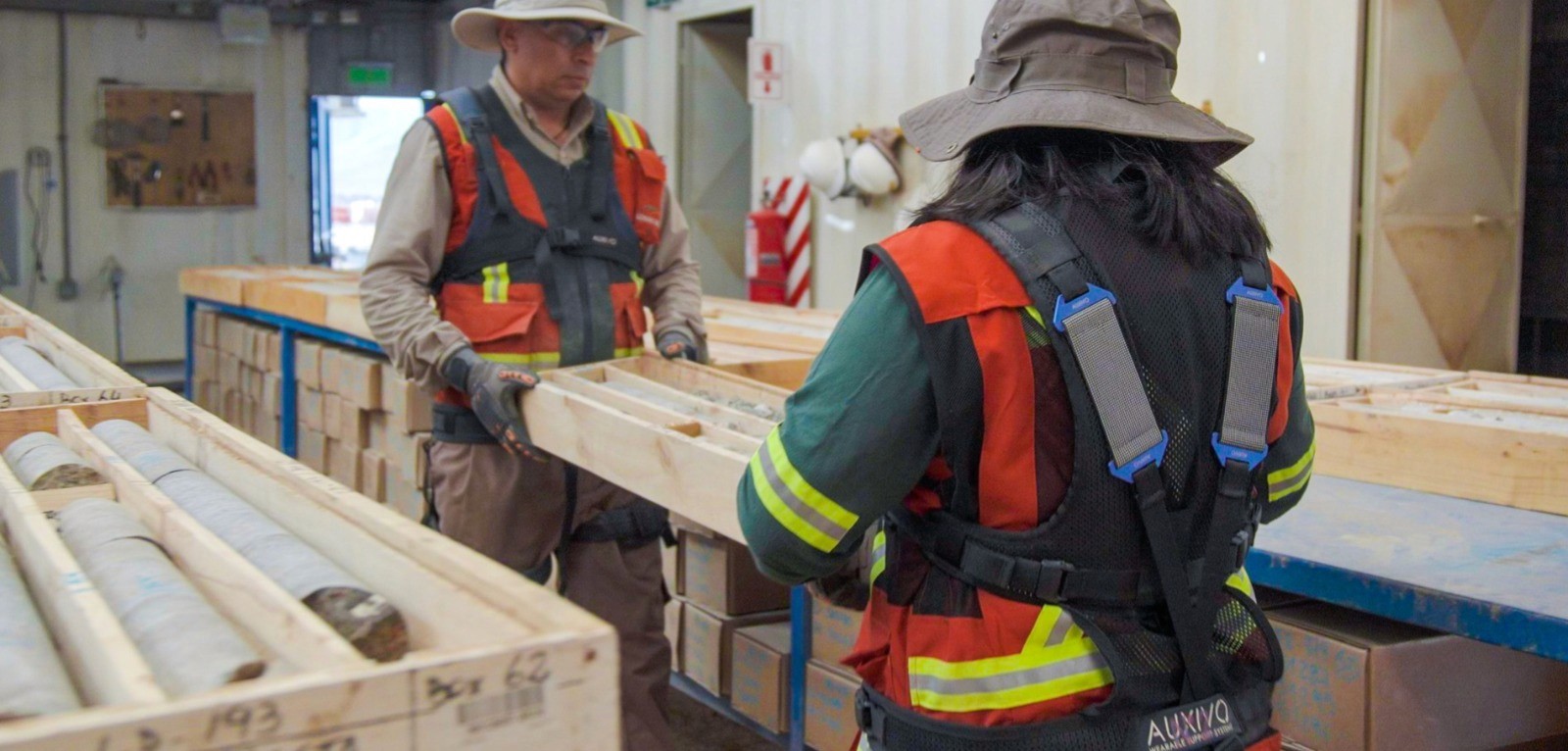
Reduce fatigue and MSDs in mining environments with the LiftSuit, a lightweight lumbar exoskeleton that reduces back effort by up to 33%.