
Mobility assistance for MS and Parkinson's
Portable exoskeleton providing motorized assistance for walking to reduce fatigue and support daily autonomy.
Is your exoskeleton sitting on a shelf? Discover the 6 steps to getting your employees to truly adopt it, from the initial trial to full deployment.
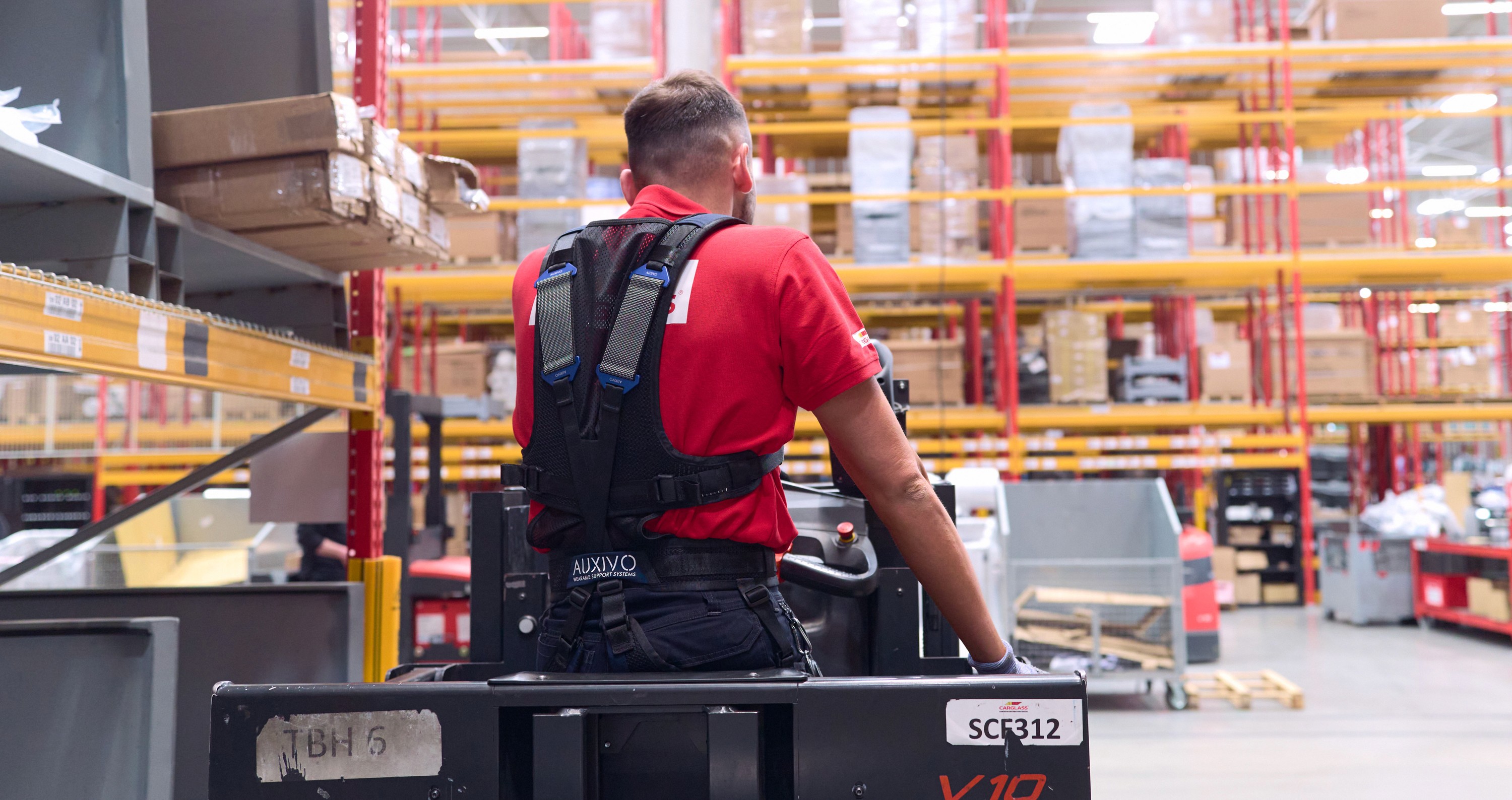
Choosing the right exoskeleton is half the job. The other half is making sure your employees are still wearing it three months from now.
We often see the same story: the equipment is well chosen, employees are curious the first week, and then the exoskeleton ends up on a shelf. The problem is almost never the device. It's how it was introduced.
Here's what separates an exoskeleton that gets adopted from one that gets forgotten. (For the step before this one, see our guide How to Choose the Right Exoskeleton for Your Business.)
In most cases, failure comes down to one of these four mistakes:
Everyone wears it for 8 hours on day one. The body needs time to adjust. Too much, too soon, and the employee concludes that "it doesn't work."
It's handed out without training. A poorly fitted or poorly adjusted exoskeleton gives little support and becomes uncomfortable.
No one on site is responsible for it. Without a go-to person, small questions go unanswered and the device stays in the locker.
Employees aren't asked for their opinion. Yet they're the ones who decide, in the end, whether they put it on in the morning.
Start small: 5 to 8 testers, for at least 2 weeks. Pick employees who actually do the targeted task, including at least one skeptic. If the equipment wins over a skeptic, it will win over the rest of the team.
Have management or the supervisor introduce the project. Employees need to understand that the goal is their health, not a faster pace. That's often their first concern.
Train every tester. An expert shows them how to put the exoskeleton on, fit it to their size and adjust the support level for the task. Ideally, the expert then goes with the testers to their workstation.
Increase wearing time gradually. Nobody should wear an exoskeleton for a full shift right from the start. See the table below.
Name an on-site "super user." This is the person who answers questions, makes basic adjustments and passes feedback along. Later, they become the trainer for their coworkers.
Gather feedback, then roll out. Ask simple questions: Is the fit right? The support level? Comfort? Ease of use? Would you keep it, yes or no? If the answer is yes, the super user trains the other teams, and follow-up with refresher training is planned.
Examples of gradual ramp-up recommended by manufacturers
Exoskeleton | Type | Recommended ramp-up |
|---|---|---|
LiftSuit (Auxivo) | Back, passive | 2 h/day in week 1, 4 h in week 2, 6 h in week 3, full shift (8 h) in week 4 |
Japet.W+ | Lumbar, active | 1 h/day for the first 3 days, then +30 min every 3 days, up to 4 h by day 20 |
Each device has its own recommendations. We give you the plan for your chosen model during training.
This approach isn't just our own best practice. A draft ISO standard on the topic, ISO/DIS 25563, was registered on August 24, 2026. It proposes a structured method for integrating exoskeletons into the workplace: defining the need, selecting the device, assessing how the worker, the device and the task interact, then rolling out.
An important note: this text is still under development. It is not in force in Canada and is not used to certify products. But it confirms one thing: an exoskeleton isn't set up like equipment you take out of a box. It's integrated into a workstation, with the people who work there.
Take a warehouse that wants to reduce back strain for its order pickers. The LiftSuit is a passive, textile exoskeleton. It takes on roughly 20 to 40% of the back's muscle effort when bending and lifting.
Step | Details | Cost |
|---|---|---|
Trial | 6 LiftSuits rented for 2 weeks ($190 each) | $1,140 |
Purchase | 6 LiftSuits ($1,950 each) | $11,700 |
Credit | 50% of rental fees deducted from the purchase | –$570 |
Total if the trial is successful | $12,270 |
The company only commits after seeing its own employees, on their own tasks, adopt the equipment. And if the trial doesn't convince them, they've spent only $1,140.
An exoskeleton only reduces strain on the body if it's worn. Start with a few testers, train them, increase wearing time gradually, name a go-to person and listen to your employees. That's what turns a trial into a lasting rollout.
Want to test an exoskeleton with your team? Exoskeletons Canada supports you from workstation analysis to full rollout: model selection, trial rental, on-site training and follow-up. Contact us to plan a trial.
Portable exoskeleton providing motorized assistance for walking to reduce fatigue and support daily autonomy.
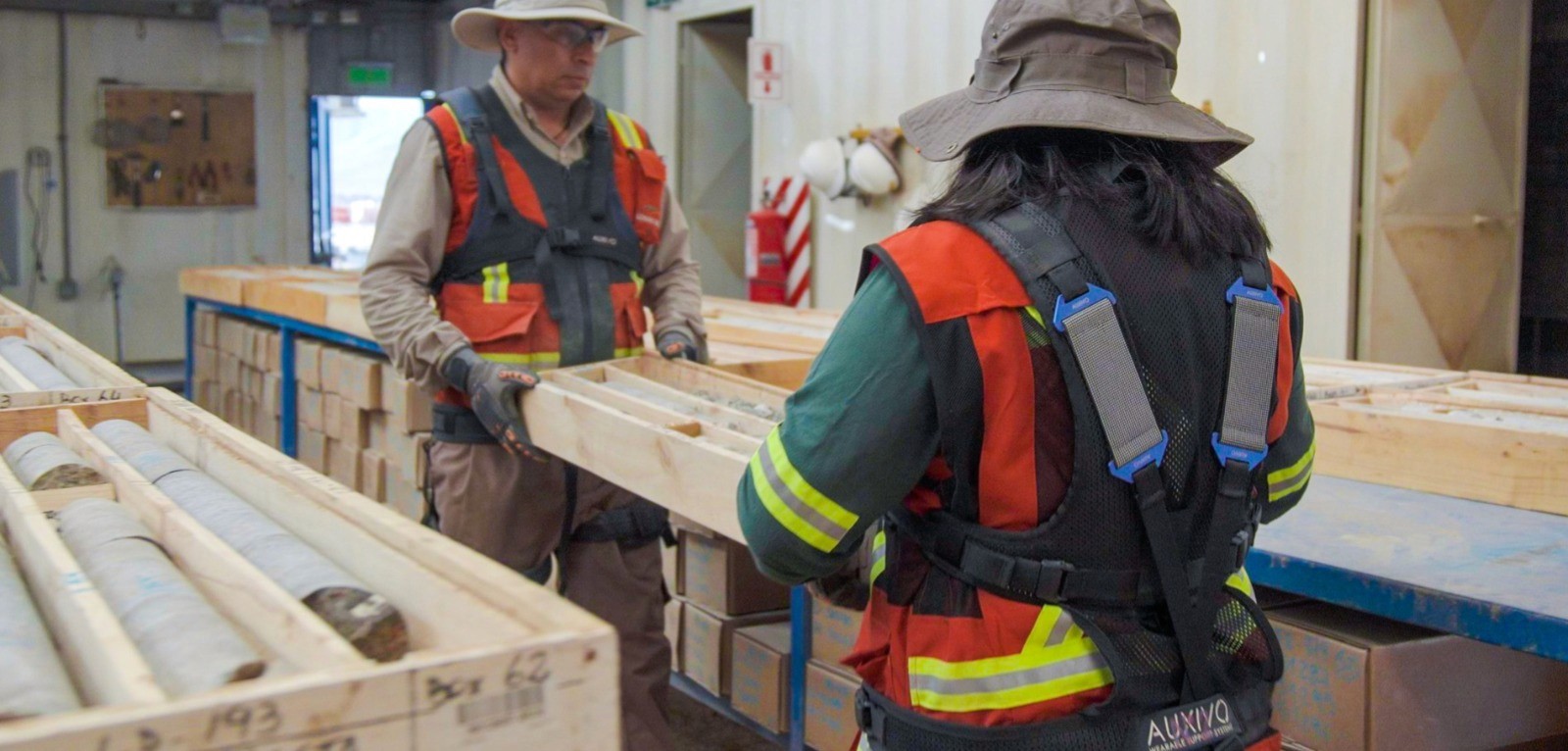
Reduce fatigue and MSDs in mining environments with the LiftSuit, a lightweight lumbar exoskeleton that reduces back effort by up to 33%.