
Mobility assistance for MS and Parkinson's
Portable exoskeleton providing motorized assistance for walking to reduce fatigue and support daily autonomy.
Musculoskeletal disorders are the leading cause of early retirement among dentists. Here is what can change that trajectory.

We often think of back problems as something that just "comes with age," an inevitability vaguely associated with the profession without giving it much thought. However, when we look closer at the data, the scale of the problem is surprising: musculoskeletal disorders (MSDs) are not just an end-of-career discomfort for dentists. In fact, they are the most common cause of early retirement for health reasons in the profession, ahead of mental health disorders, ahead of cardiovascular diseases, and ahead of almost everything else.
A landmark study of 189 dentists who took early retirement for non-life-threatening health reasons isolated the specific causes of these departures:
55% of cases were due to musculoskeletal disorders: back, shoulders, neck, and wrists.
28% were related to mental health disorders.
The rest were divided among neurological, circulatory disorders, or other causes.
Even more striking: early retirement for health reasons was four times more common among dentists than among physicians, with a median age as low as 42. And among respondents affected by MSDs, 90% considered their health condition to be work-related, with nearly half viewing it as "entirely" attributable to their clinical practice.
In other words: it is not age that drives dentists out. It is often the job itself, practiced for enough years, that eventually makes practicing impossible.
It is no coincidence that this profession stands out so much. Dental work combines several risk factors at the same time, which is rare in other occupations:
Prolonged static postures. Unlike dynamic physical work, dentistry requires maintaining a near-motionless posture, often bent over, often with the arms slightly elevated, for long minutes, several times a day, for decades.
Fine precision under visual constraints. The use of magnifying loupes and restricted fields of view forces the upper body to remain still to keep a stable image, which immobilizes the shoulders and neck more than less precise work would.
Repeated load on the same structures. The same muscles (trapezius, supraspinatus, levator scapulae) are strained in an almost identical manner, patient after patient, with no real recovery period in a busy day.
Limited access to real-time ergonomic adjustments. A chair or patient position cannot be readjusted as easily as an office workstation; the practitioner's posture often adapts to the patient, rather than the other way around.
These elements explain why certain specialties with high precision requirements, such as orthodontics and endodontics, are among the most affected in scientific literature.
It is easy to reduce this issue to a matter of comfort. But the implications go far beyond that:
For the practitioner, an entire career built on years of training and skill development can end prematurely, often at an age when other professions are not even considering mid-career yet.
For a clinic, it means a loss of continuity for patients, an unexpected recruitment burden, and sometimes the outright closure of a practice built over several years.
For the broader health care system, it is a net loss of clinical expertise in a context where access to dental care is already an issue in several regions of Canada.
The good news, if you can call it that, is that the vast majority of affected dentists consider their condition to be work-related, which means it is, at least in part, a risk that can be reduced, rather than an individual inevitability.
Approaches that make a documented difference include workstation adjustments, active breaks and targeted strengthening exercises, a periodic review of chairside posture, and increasingly, support equipment designed specifically for the constraints of dental work, including arm exoskeletons, which support part of the weight of the upper limb during prolonged elevated interventions, thereby reducing the static load on the shoulders that lies at the heart of the problem.
None of these measures, taken alone, eliminates the risk. But taken together, and introduced early in a career rather than in response to already established pain, they represent the difference between a dentistry career that ends at 42 and one that reaches planned retirement in good health.
The question asked in the title is therefore not rhetorical. The data already answers it quite clearly; the real question that remains is what each practitioner and each clinic chooses to do with it.
Portable exoskeleton providing motorized assistance for walking to reduce fatigue and support daily autonomy.
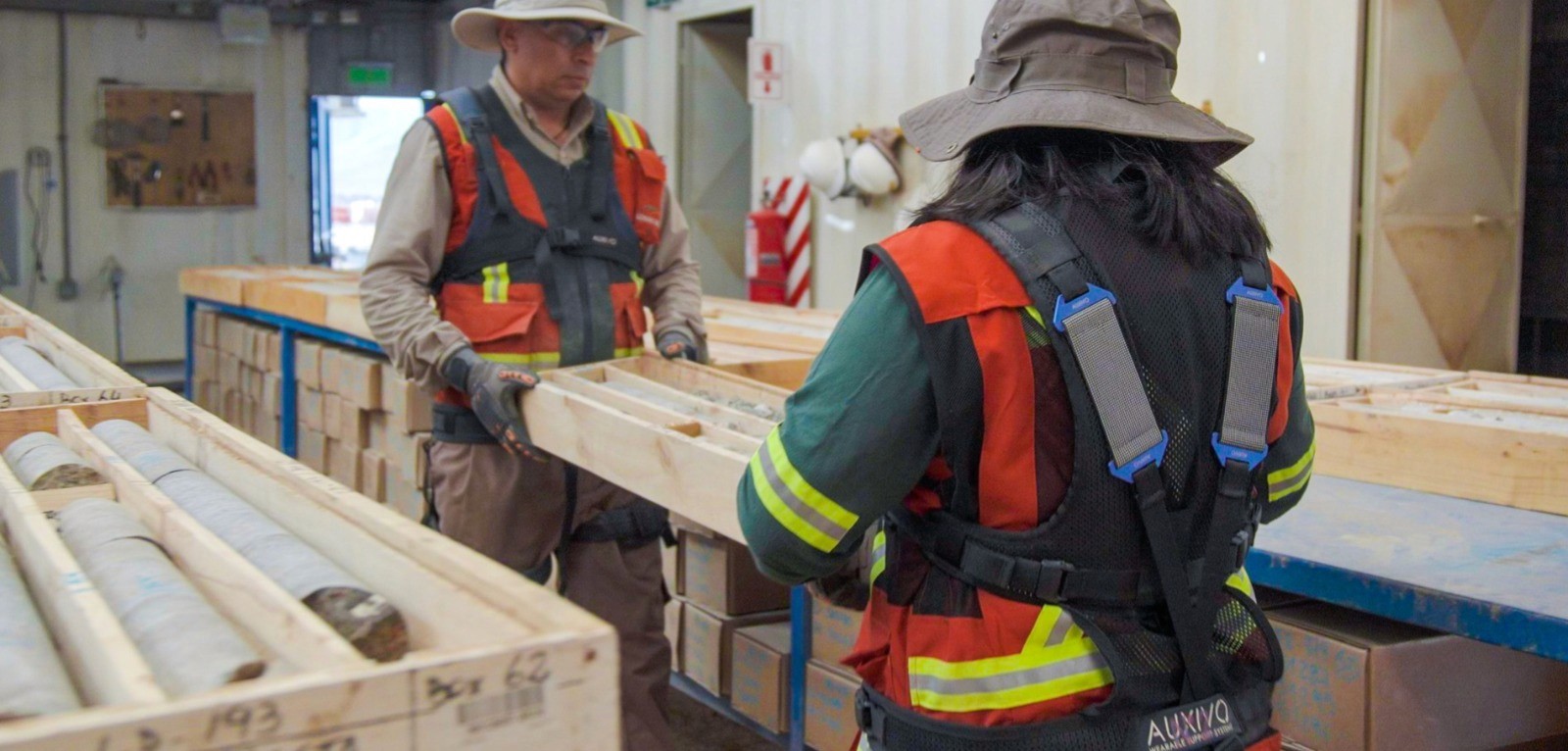
Reduce fatigue and MSDs in mining environments with the LiftSuit, a lightweight lumbar exoskeleton that reduces back effort by up to 33%.