
Mobility assistance for MS and Parkinson's
Portable exoskeleton providing motorized assistance for walking to reduce fatigue and support daily autonomy.
As an employer, you have injury prevention obligations. Here is what the law says and how to respond realistically.
Most managers know they need to protect their employees. But many do not know exactly what the law requires or what can happen to them if they do not comply.
When it comes to ergonomics and the prevention of musculoskeletal disorders (MSDs), legal obligations in Canada are clear. What is less clear is how to respond to them in a concrete and defensible way.
Here is an overview of what the law provides, and what it means for your business.
Whether you are in Ontario, Quebec, Alberta, or British Columbia, all provincial and federal occupational health and safety legislations share a common principle: the employer has an obligation to take all reasonable precautions to protect the health and safety of their workers.
This principle is known as due diligence. In the event of an accident or complaint, your liability will be assessed based on this principle.
"Reasonable" is the key word. This does not mean you have to eliminate every possible risk. It means you must demonstrate that you did what a reasonably prudent employer would have done under the same circumstances.
The AOHS requires employers to identify and eliminate hazards at the source. MSDs, including lower back injuries, are explicitly recognized as occupational hazards by the CNESST.
Since the 2021 reforms (Bill 59), employers' prevention obligations have been strengthened. Businesses in certain sectors, including material handling, must now implement a prevention program that includes the identification of ergonomic risks and the measures taken to reduce them.
Each province has its own legislation, but the core obligations are similar:
Ontario — Occupational Health and Safety Act (OHSA-ON): requires the employer to take reasonable precautions to protect workers, including against ergonomic hazards.
Alberta — Occupational Health and Safety Act: requires hazard assessment and documented control measures.
British Columbia — Workers Compensation Act and WorkSafeBC regulations: outline specific obligations for tasks involving manual materials handling.
Federal (federally regulated businesses — transport, banks, telecommunications) — Canada Labour Code, Part II: mandates a hazard prevention program that includes MSDs.
Musculoskeletal disorders, including lumbar sprains, herniated discs, and tendinitis, represent the leading cause of compensated work-related injuries in Canada.
According to the CNESST, MSDs account for approximately 30% of all occupational injuries in Quebec each year. In material handling, this figure is even higher.
This is not a legal grey area. Regulatory bodies expect employers in the material handling sector to have control measures in place for this type of risk.
In the event of an accident, an inspector or court will evaluate whether you have:
1. Identified ergonomic risks Have you mapped out workstations where MSDs are possible? Have you documented task-related risks (repetitive lifting, awkward postures, vibration)?
2. Assessed these risks Have you measured the frequency, duration, and intensity of the risky tasks? A simple observation or ergonomic assessment form is often sufficient.
3. Implemented control measures This is where many employers are vulnerable. Identifying a risk without addressing it is almost worse than not identifying it at all.
Acceptable control measures include: training, job rotation, mechanical aids (carts, pallet jacks), and ergonomic protective equipment such as exoskeletons.
4. Trained and informed your workers Do your employees know how to lift properly? Have they been informed of the risks associated with their roles?
5. Documented all of the above What is not written down does not exist in the eyes of a court. Documenting your efforts is your best defense.
If an inspector visits your business following an accident, a complaint, or a planned inspection and finds that ergonomic risks have not been managed, they can:
Issue a correction notice requiring you to modify working conditions within a specified timeframe
Order a temporary shutdown of the workstation until corrected
Recommend penal prosecution in cases of gross negligence
In the event of a serious worker injury, the employer may also face civil lawsuits from the employee, especially if known preventive measures had not been implemented.
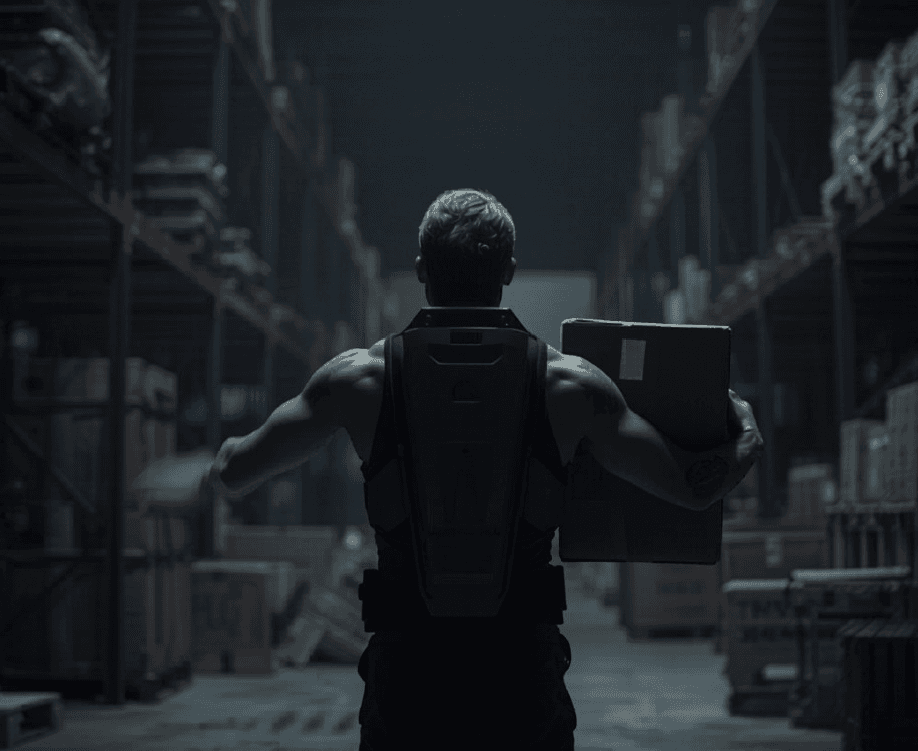
The LiftSuit is recognized as ergonomic protective equipment. By deploying it in your handling operations, you:
Meet the obligation to implement control measures. The LiftSuit reduces the load on the lower back by 30 to 40% with each lift — this is a documented and measurable control measure.
Create a paper trail of your preventive approach. Purchasing and deploying ergonomic equipment is concrete evidence of due diligence.
Reduce your long-term CNESST assessment rates. Businesses with low injury rates pay less. Fewer injuries = fewer claims = reduced assessment rates.
If you do not yet have a formalized prevention program for ergonomic hazards, here is a simple starting point:
Identify your high-risk jobs — which employees lift loads, perform repetitive tasks, or work standing for long periods?
Document risky tasks — frequency, weight lifted, duration of awkward postures
Implement at least one control measure per identified risk — training, rotation, equipment
Keep written records of every step
This is not a complex process. But failing to do it creates legal and financial exposure that you can easily avoid.
If you want to discuss how the LiftSuit can integrate into your prevention strategy, we offer consultations and on-site demonstrations across Canada.
This article is provided for informational purposes and does not constitute legal advice. For questions specific to your situation, consult an occupational health and safety advisor or a specialized legal professional.
Exoskeletons Canada is the official distributor of the Auxivo LiftSuit in Canada.
Portable exoskeleton providing motorized assistance for walking to reduce fatigue and support daily autonomy.
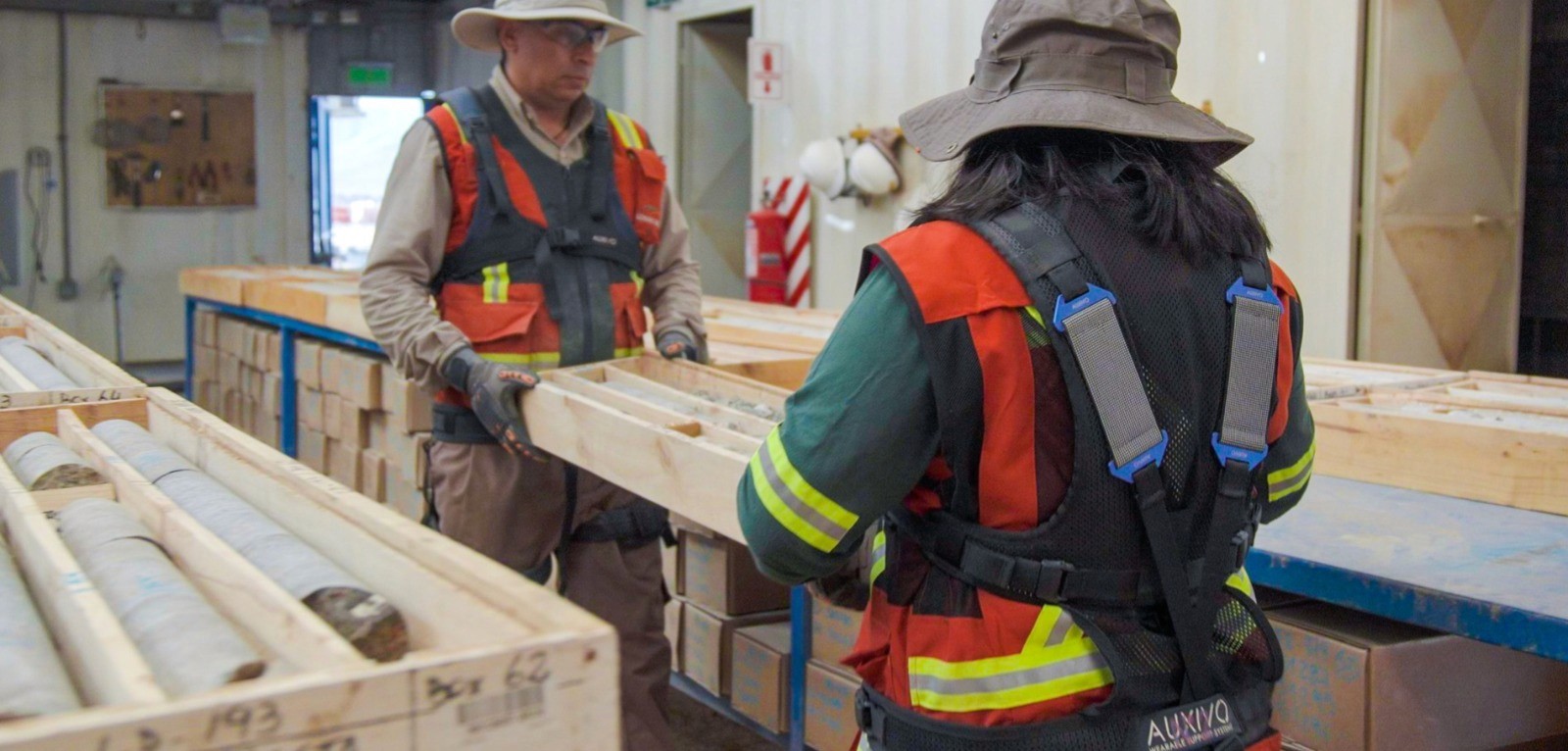
Reduce fatigue and MSDs in mining environments with the LiftSuit, a lightweight lumbar exoskeleton that reduces back effort by up to 33%.