
Mobility assistance for MS and Parkinson's
Portable exoskeleton providing motorized assistance for walking to reduce fatigue and support daily autonomy.
Industrial exoskeletons are proven, accessible, and cost-effective. Here’s why Canadian businesses are starting to take action.
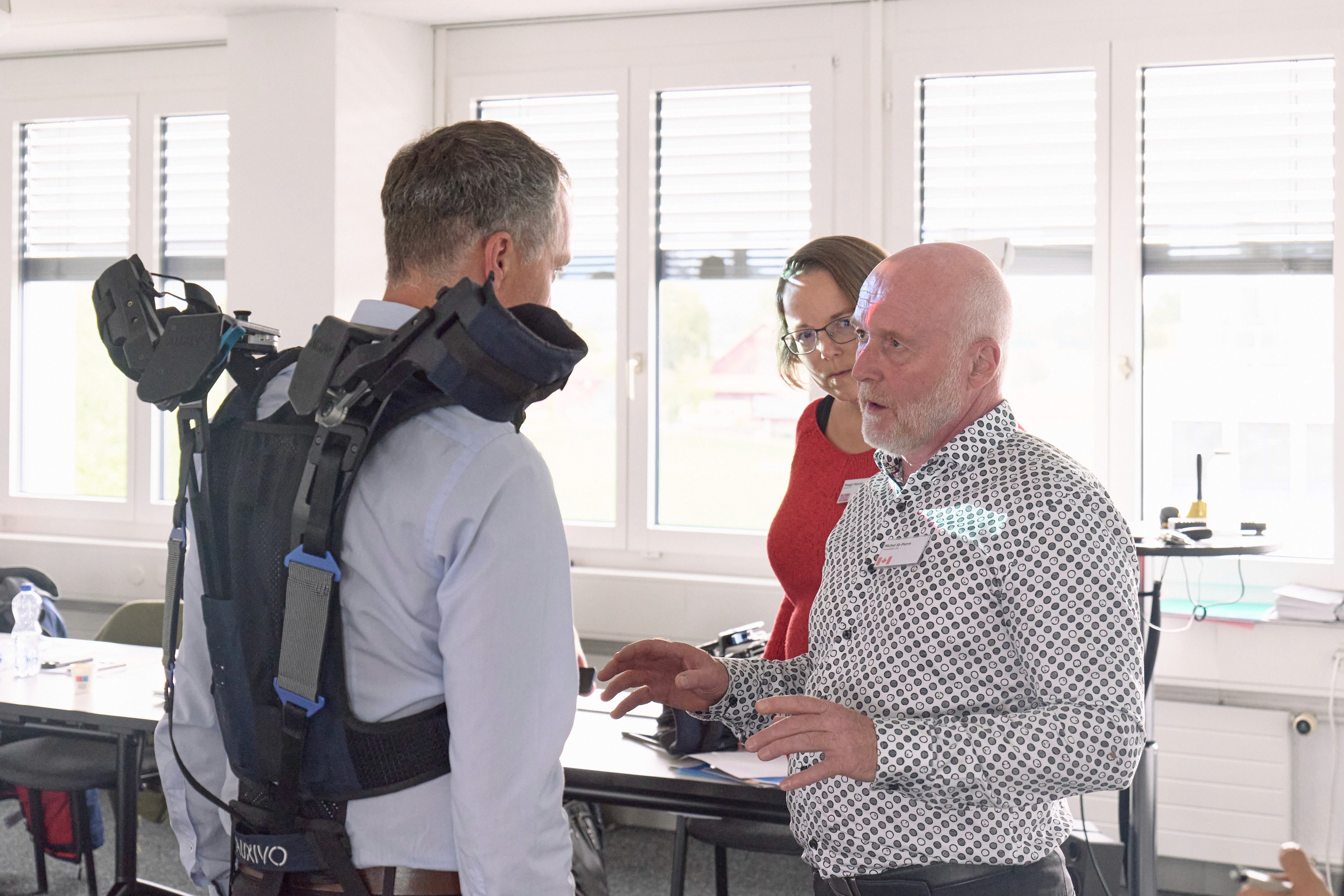
In Germany, German Bionic has been equipping automotive assembly lines for years. In Japan, Cyberdyne and Panasonic Atoun are integrating exoskeletons into factories as a standard protection tool. In South Korea, the government actively subsidizes their deployment in high-risk sectors.
And in Canada?
Canada represented 2.3% of the global exoskeleton market in 2023. A figure that alone sums up our lag and the scale of the missed opportunity.
It's not a technology issue. The industrial exoskeleton is proven, reliable, and available right now. It's a decision issue. And companies that delay deciding pay the high price, literally.
Musculoskeletal disorders (MSDs) are not a human resources problem. They're an operational performance problem.
The economic burden of MSDs in Canada is estimated at $22 billion annually. This figure does not include indirect productivity losses, training replacements, or the impact on team morale.
In Quebec alone, MSDs cause more than 2.5 million days of work absence per year. The cost of these ailments exceeds CAD$25 billion annually. The average length of an absence linked to an MSD? 105 days. That's more than three months without your employee, during which someone else has to learn their job, make mistakes, and absorb the workload.
MSDs account for one-third of compensable workplace injuries under the CNESST. They are by far the most common injuries in every workplace.
The problem is known. So is the solution. So why hasn't Canada made the switch yet?
That's the first instinct. And it's understandable: an unfamiliar solution is always compared to its sticker price, never to what it helps you avoid.
Let's do the simple math: an MSD injury accepted by CNESST generates, on average, thousands of dollars in compensation, medical costs, and staff replacement. Add the impact on your company's insurance premiums in the years that follow.
A passive exoskeleton, the most accessible type, often pays for itself in a few months once it prevents the first serious injury.
That's the second most common objection. And it deserves a real answer: companies that successfully integrate exoskeletons don't force them on people, they introduce them, let workers try them, and let workers see the difference for themselves at the end of the day.
Perceived muscle fatigue, lower-back pain at the end of a shift: these are cues workers understand better than any number.
In the industrial sector, manufacturing (including automotive and aerospace) accounts for 68% of all exoskeleton shipments and revenue. Automakers have been using them on their assembly lines for years. The proof of effectiveness exists. What is often missing is access to that information, and that's precisely why companies like Exosquelettes Canada exist.
The United States, Germany, China, South Korea and Japan are the regions adopting exoskeletons the most, representing 73% of global revenue.
These countries aren't ahead because they have more money or fewer regulations. They're ahead because their plant managers, OHS leads and buyers decided to act before the problem piled up any further.
The Canadian exoskeleton market is expected to grow at an annual rate of 16.8% between 2024 and 2030. This isn't a niche trend. It's the signal of a transformation already under way.
Companies that integrate exoskeletons now build three advantages at once:
A human advantage. Fewer injuries, fewer absences, workers ending their day with less pain. It's noticeable and it builds loyalty.
An operational advantage. Fewer production stoppages linked to accidents, less turnover, fewer rising insurance premiums. ROI is measurable and fast.
A competitive advantage. In a market where the shortage of skilled labour is real, a reputation as an employer that physically protects its workers becomes a differentiating recruitment argument.
The good news is that you're not being asked to change everything overnight.
An effective approach starts by identifying the high-risk jobs in your operations those where workers repeat the same motions for hours a day, lift heavy loads, or maintain awkward postures. These are the jobs that generate the most injuries, and these are the jobs where the exoskeleton delivers the fastest return on investment.
Then comes a targeted, documented, measured pilot project. Three to six months is usually enough to get concrete data on the impact in your specific context.
It's: how long can you afford not to?
Every month without exoskeletons means lost workdays, compensation paid out, tired teams, and talent leaving to work elsewhere.
The technology is ready. The market confirms the trend. Canadian pioneers, like ABB in Quebec, are showing the way.
Exosquelettes Canada supports industrial companies and healthcare facilities through this transition, from needs assessment to full deployment, with results tracked at every step.
Want to see what that would look like in your context? Request a no-obligation demo →
Portable exoskeleton providing motorized assistance for walking to reduce fatigue and support daily autonomy.
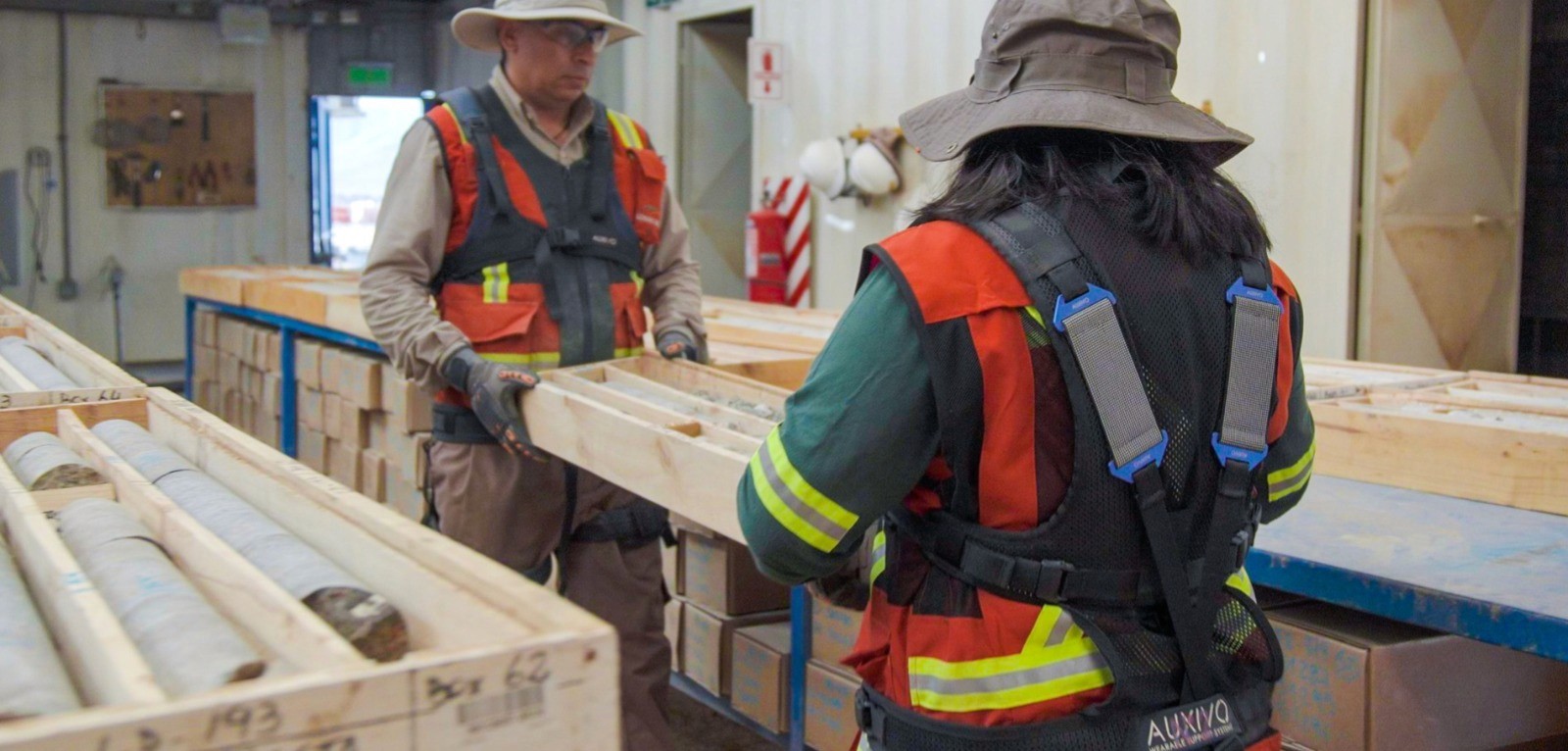
Reduce fatigue and MSDs in mining environments with the LiftSuit, a lightweight lumbar exoskeleton that reduces back effort by up to 33%.