
Mobility assistance for MS and Parkinson's
Portable exoskeleton providing motorized assistance for walking to reduce fatigue and support daily autonomy.
The industrial exoskeleton market is expected to almost triple by 2033. Here is what the first real-world results in warehouses show.
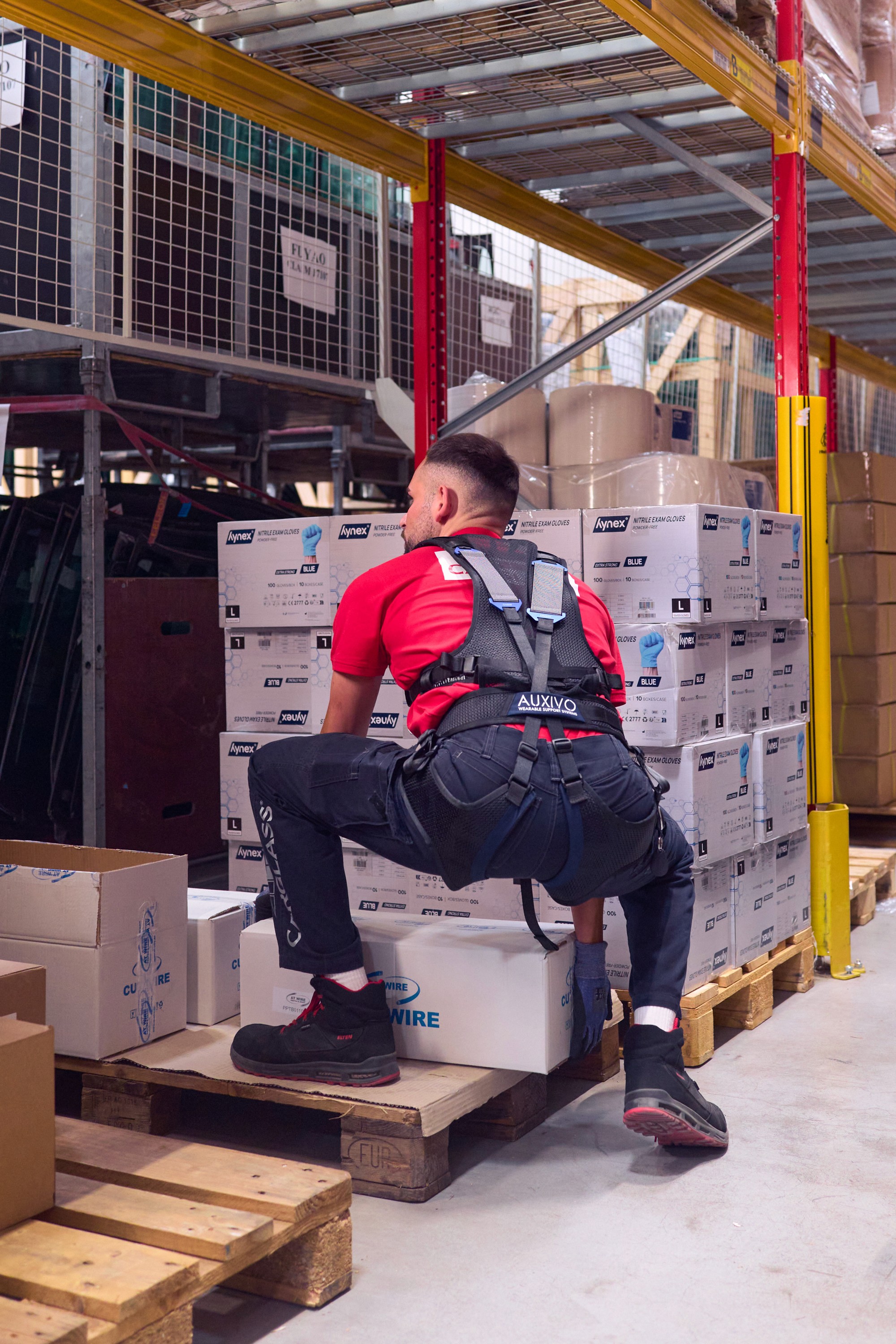
Since 2022, the transportation and warehousing sector has held the highest rate of serious injuries among 19 major industry sectors in the United States, at 3.8 cases per 100 workers, primarily caused by overexertion: repeated lifting, pulling, pushing, and reaching overhead. This is not a new statistic. What is changing is what companies are beginning to do in response.
The global market for exoskeletons, valued at approximately US$590 million in 2025, is projected to reach US$1.79 billion by 2033, representing an annual growth rate of 14.5%. And unlike five years ago, this growth is no longer driven solely by healthcare and rehabilitation: distribution, warehousing, and material handling have now become explicit drivers, alongside construction and manufacturing.
The most interesting signal comes not from market projections, but from the first measured trials in the field.
A longitudinal study conducted by HeroWear on its Apex 2 back-assist exosuit, deployed in five distribution centres for 8 to 23 months (311,000 combined working hours), documented a 62% reduction in sprain and strain injuries; the annual injury rate fell from 10.2 to 3.8 per 100 workers, essentially bringing this group down to the level of the sector's lowest average rate rather than its peak.
Among the participating companies, Plymouth Inc., a West Coast protein distributor, made its experience public. Its operations manager summarized the stakes this way: a night-shift employee there moves an average of 60,000 pounds per shift, a volume that makes the question of physical load difficult to ignore, regardless of the size of the company.
Swiss manufacturer Auxivo conducted a similar exercise with its LiftSuit back-assist exosuit with three logistics clients, equipping 23 warehouse employees with EMG sensors and inertial measurement units during real lifting, sorting, and loading tasks. The results measured in the field: a 25% reduction in lower back muscle activity, a 24% reduction in static squat load, a 7% drop in heart rate, and a 28% average reduction in perceived exertion, with 70% of participants reporting clear physical relief during repetitive tasks. A peer-reviewed study on the LiftSuit reports biomechanical effects in the same direction during lifting and prolonged static leaning. Auxivo also cites a 21% reduction in peak back muscle activity during repetitive lifting and a 44% reduction in hip muscle fatigue during load carrying. At B. Braun, a healthcare logistics provider, and at Carglass, where a warehouse operator described recurring lower back pain before the device was introduced, the company summarizes the experience simply: "working without it now seems impossible."
Another documented case, involving an unnamed multinational grocery chain, reports an 8% increase in productivity (cases prepared per hour) after the introduction of exosuits, with a projected 13-fold return on investment over five years.
Three pressures are converging on warehouse operators at the same time:
The cost of injuries is not going down. With a serious injury rate that is already the highest of all major sectors, every percentage point of reduction translates directly into working days saved and compensation costs avoided.
Staff turnover remains a structural problem. A physically demanding role in a tight labour market translates to higher turnover — and every employee who leaves must be recruited and trained again.
The technology itself has become simpler. The latest generation of exosuits, like those studied by HeroWear, are lightweight passive devices rather than bulky robotic structures — an important adoption factor when the tool must be worn eight hours a day without hindering mobility.
It would be dishonest to present this as a shift that has already been completed. DHL itself, in its own trend analysis published on exoskeletons in logistics, recognizes that "large-scale deployments are still to come" and that rigorous, independent evidence of long-term economic and health effectiveness is still limited. Most current devices are designed for specific movements, which still confines them to targeted applications rather than universal equipment for all stations.
In other words: adoption is real, early results are encouraging, but we are at the stage of well-documented pilot trials, not yet that of the industry standard.
For a company evaluating the ergonomics of its operations, the right time to look into this is not after the technology has become the standard; it is precisely during this phase where early adopters are already documenting concrete results and suppliers are refining their products based on actual use. The most exposed roles — repetitive lifting and handling that strain the lower back and hips, or order picking with raised arms that strains the shoulders — each correspond to a different type of exosuit, and this is precisely where making the right device choice makes the difference before the repetitive load translates into a claim, a work stoppage, or the departure of an experienced employee.
The question is no longer really "does it work?"; early data already goes a long way toward answering that. The real question, for most warehouses, is knowing which station to start with.
Portable exoskeleton providing motorized assistance for walking to reduce fatigue and support daily autonomy.
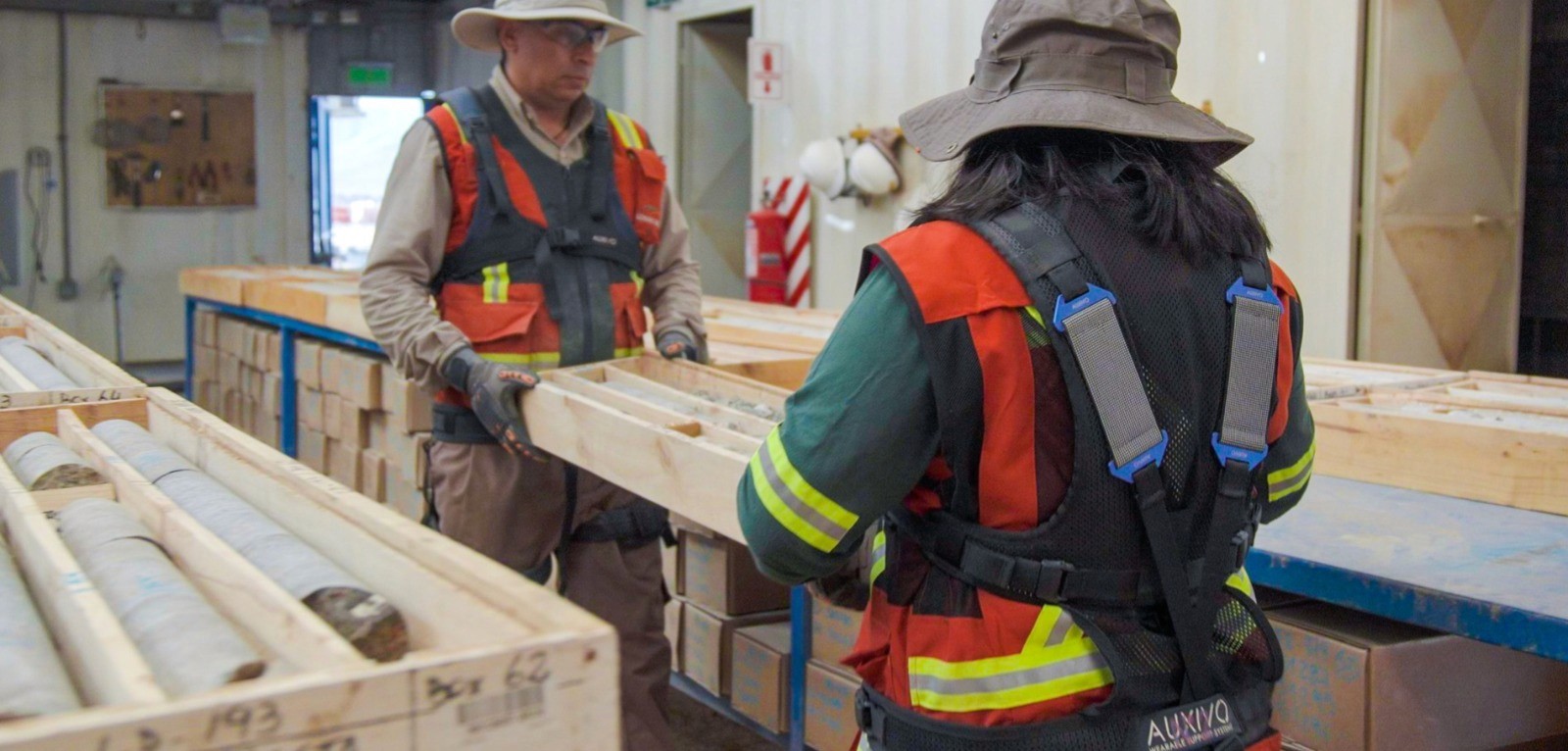
Reduce fatigue and MSDs in mining environments with the LiftSuit, a lightweight lumbar exoskeleton that reduces back effort by up to 33%.