
Mobility assistance for MS and Parkinson's
Portable exoskeleton providing motorized assistance for walking to reduce fatigue and support daily autonomy.
Discover how Japet.W+ fits into a rehabilitation plan to secure every step of the return to work.
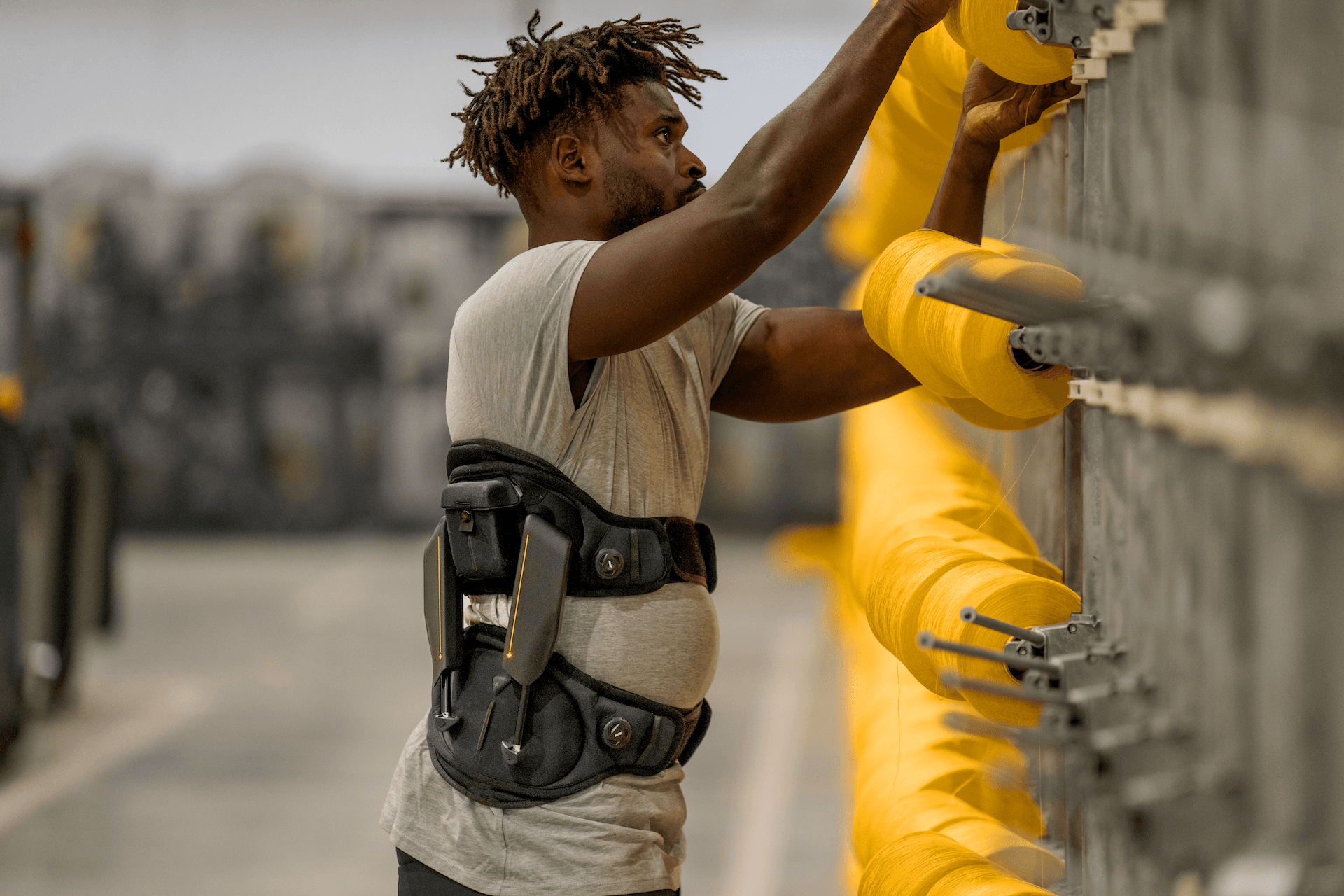
We often talk about the injury. Rarely about what happens afterward when the worker returns to their job too soon, without adequate support, and is injured again. That’s where the Japet.W+ truly changes the game, across Canada.
Your patient is out of the acute phase. The pain has eased. The workers’ compensation board in their province is pushing a return to work. And they want to get back to their rhythm, income, and routine.
But this gradual return-to-work window is one of the most vulnerable parts of the entire rehabilitation process. Recurrences of low back injuries happen very frequently in the first weeks back, often because the muscular structure is not yet ready to handle the demands of the job.
The problem is not the worker’s willingness. It is the gap between what their body can do and what their job demands, a gap we close gradually, but which remains dangerous while it is closing.
After a few weeks off, several physiological phenomena make the lumbar spine particularly vulnerable :
Rapid muscular deconditioning of the erector spinae and transversus muscles
Reduced lumbar proprioception, the worker “feels” their spine less
Central hypersensitization that amplifies the perception of effort
Psychological pressure to perform, which pushes people to do too much too soon
It is in this context that the Japet.W+ fits in as a transition tool not to replace rehabilitation, but to make the return safer while the body regains functional capacity.
The Japet.W+ provides continuous axial decompression that reduces load on the discs and facet joints, allowing shift length to increase gradually without overloading the structures.
Lifting, carrying, bending. The Japet.W+ actively reminds the lumbar spine to stay aligned through traction; it acts like mechanical biofeedback, signalling poor positions before the tissues do so painfully.
As strength and proprioception return, use of the Japet.W+ decreases. It becomes a targeted prevention tool used on intense days or for high-risk tasks.
In Canada, management of workplace injuries and funding for rehabilitation aids is handled province by province. Good news : the Japet.W+ is a recognized orthopedic device that can be included in a rehabilitation plan funded or reimbursed by your region’s workers’ compensation board. Here is an overview by province.
Province / Territory | Responsible organization |
Quebec | CNESST - Commission des normes, de l’équité, de la santé et de la sécurité du travail |
Ontario | WSIB - Workplace Safety and Insurance Board |
British Columbia | WorkSafeBC |
Alberta | WCB Alberta - Workers’ Compensation Board |
Saskatchewan | WCB Saskatchewan - Workers’ Compensation Board |
Manitoba | WCB Manitoba - Workers Compensation Board of Manitoba |
New Brunswick | Commission des accidents du travail du N.-B. (WorkSafeNB) |
Nova Scotia | WCB Nova Scotia - Workers’ Compensation Board |
Prince Edward Island | WCB PEI - Workers Compensation Board of PEI |
Newfoundland and Labrador | WorkplaceNL - Workplace Health, Safety & Compensation Commission |
Yukon | WCB Yukon - Workers’ Compensation Health and Safety Board |
Northwest Territories & Nunavut | WSCC - Workers’ Safety and Compensation Commission |
In all of these provinces, the process is similar : the treating healthcare professional (physiotherapist, physician, occupational therapist) recommends the device as part of a rehabilitation plan. The board reviews the request and may cover all or part of the costs, depending on each program’s eligibility criteria.
Practical tip : Clearly document the link between the low back injury, the job requirements, and the expected clinical benefit of the Japet.W+. A well-written justification significantly increases the chances of approval, regardless of province.
To clarify with the patient :
It does not replace active rehabilitation; exercises remain essential
It does not mask pain like an analgesic; it reduces mechanical load
It does not correct a serious injury requiring surgery
It should not be worn continuously without clinical supervision
It is not a medical device
Manual workers : material handling, warehouse, delivery, construction
Care staff : personal support workers, hospital nurses
Service jobs involving lifting : grocery, restaurant, hospitality
Any worker with a history of disc herniation or severe lumbar sprain
In practice, we integrate the Japet.W+ into our gradual return-to-work plans starting in phase 1, in coordination with the employer, the treating physician, and the province’s workers’ compensation board. The goal : avoid recurrence that would send the worker back to square one.
Are you supporting a worker in a gradual return to work?
Contact us to assess whether the Japet.W+ fits into their rehabilitation plan and to help you prepare the file for their province’s board.
Portable exoskeleton providing motorized assistance for walking to reduce fatigue and support daily autonomy.
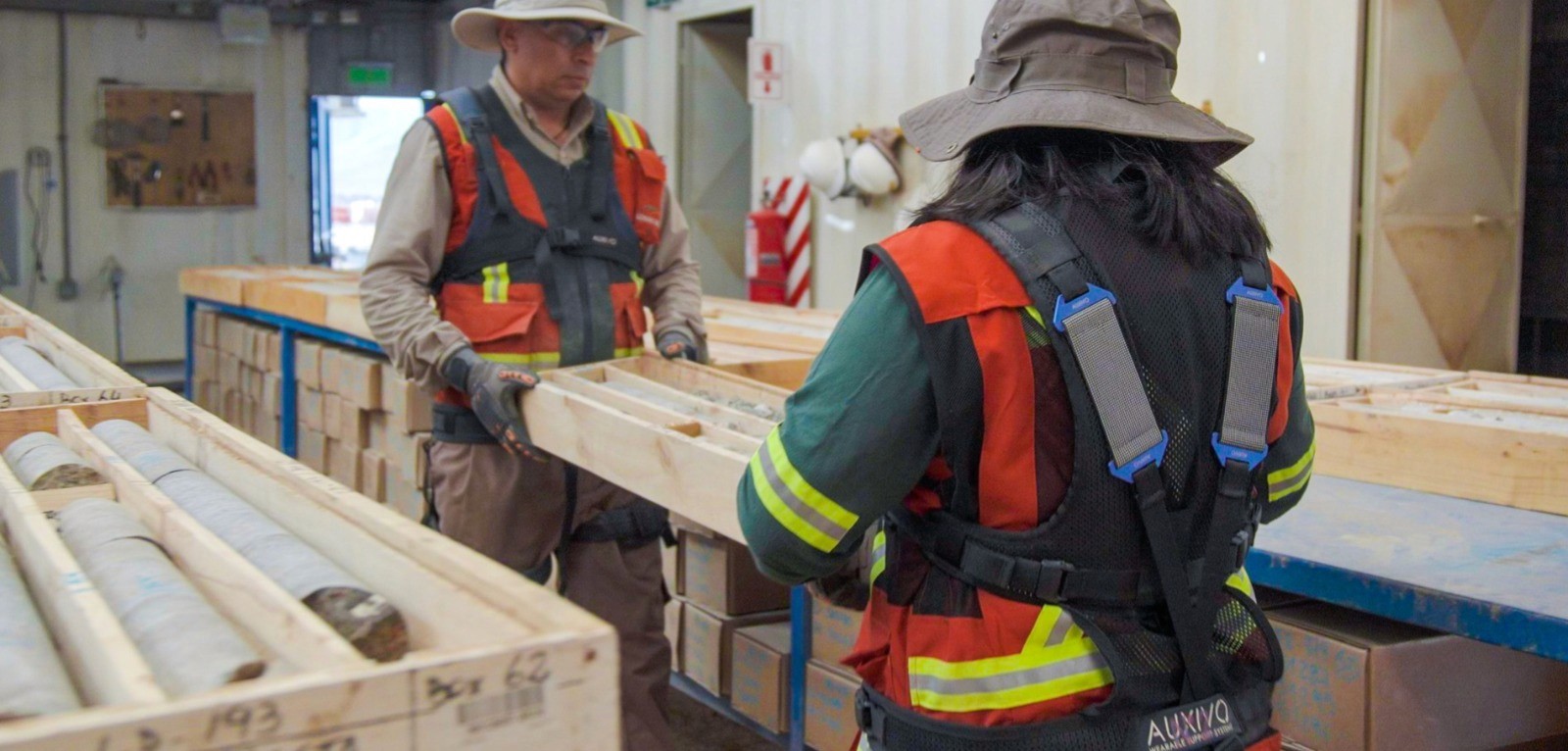
Reduce fatigue and MSDs in mining environments with the LiftSuit, a lightweight lumbar exoskeleton that reduces back effort by up to 33%.