
Mobility assistance for MS and Parkinson's
Portable exoskeleton providing motorized assistance for walking to reduce fatigue and support daily autonomy.
Discover the results of exoskeleton tests conducted in automotive garages across Quebec using the Liftsuit model from Exoskeletons Canada.
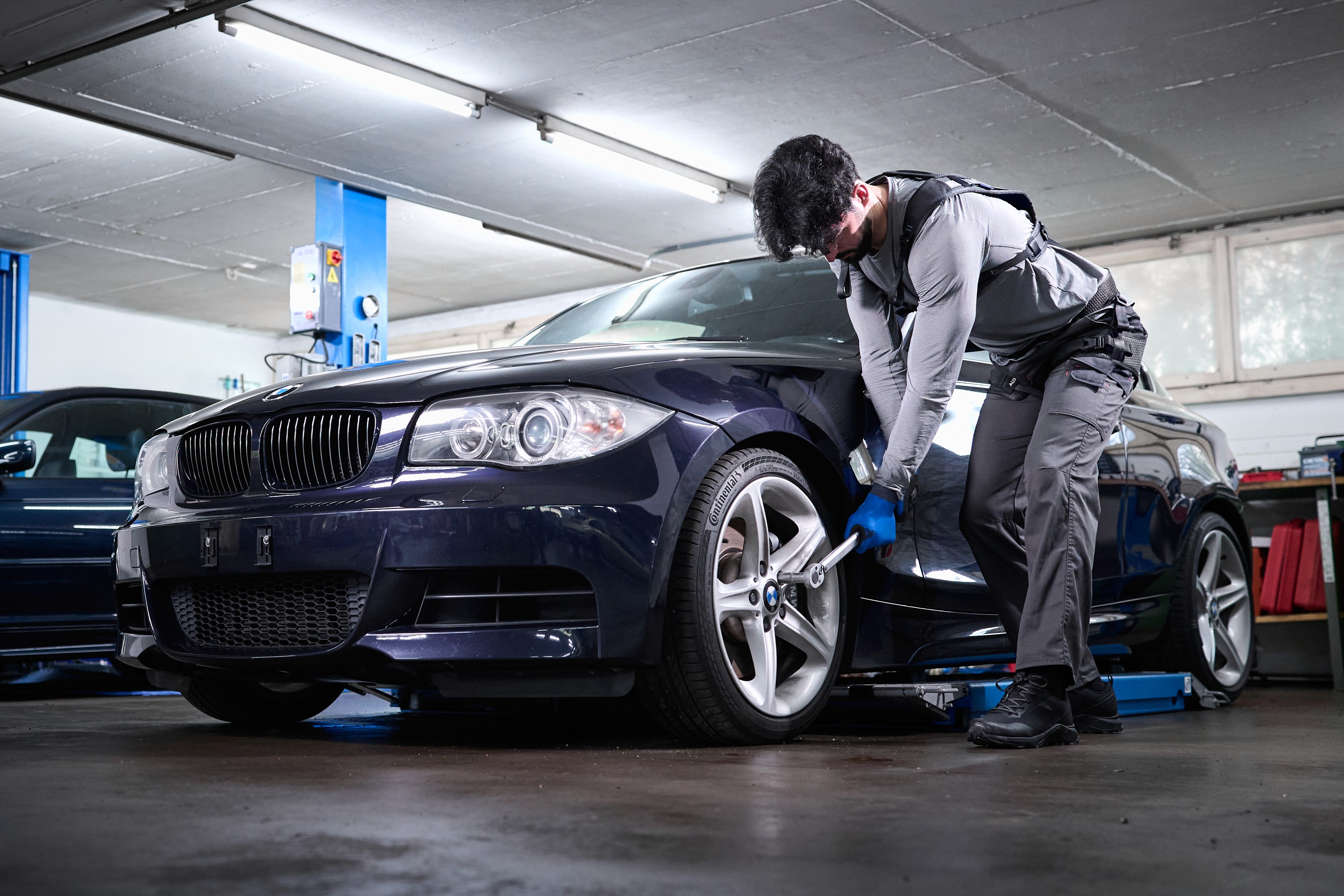
The adoption of exoskeletons in mechanical workshops in Quebec is no longer just a futuristic idea. In recent years, several car dealerships have sought to concretely validate their effectiveness with their technicians.
Tests took place in auto repair shops across Quebec, and the results speak for themselves: a tangible reduction in fatigue, an improvement in postural comfort, and a high rate of technician adherence.
Each participating technician wore the Liftsuit during several normal workdays - lifting tires, brake maintenance, chassis inspections, and handling heavy parts.
The goal was not to change their way of working but to observe how the exoskeleton naturally integrated into their daily routines.
Feedback from ergonomists and users converge on the same observations:
An average reduction of 25% to 35% in the effort felt at the lower back.
A significantly reduced fatigue at the end of the work shift.
A more stable and upright posture, even in prolonged positions.
Workshop managers also noted a decrease in the number of complaints related to physical discomfort and better productivity by the end of the day. Some workers even stated that they "didn't want to do without it" for more physical tasks such as tire changes or floor repairs.
Beyond the numbers, the tests highlighted an essential aspect: the perception of workers.
When technicians understand that the exoskeleton does not replace their strength but intelligently supports it, adherence becomes natural. Many noted that the Liftsuit made them feel "lighter" during repeated bends without limiting their movements.
The exoskeleton then becomes not only a prevention tool but also a lever for enhancing the profession. In a context where young workers seek more innovative and safe workplaces, this represents a considerable advantage for car dealerships in Quebec and Canada.
The results of these trials clearly demonstrate that passive exoskeletons can play a decisive role in preventing back injuries and ensuring the sustainability of the skilled workforce.
By integrating these technologies into their shops, dealerships can:
improve the physical health of their employees,
reduce costs associated with absences,
strengthen their health and safety culture,
and project an image of an innovative and responsible company.
The Liftsuit thus establishes itself as a concrete, easy-to-implement, and cost-effective solution in the long term.
The tests conducted in Quebec garages prove that the exoskeleton is no longer a gimmick but a true working tool for automotive mechanics.
The Liftsuit, lightweight, effective, and approved by ergonomists, allows mechanical workshops to focus on health, sustainability, and performance.
Garages that choose to adopt this technology are engaging in a modern approach to health and safety prevention and well-being at work, a winning investment for both workers and the company.
Portable exoskeleton providing motorized assistance for walking to reduce fatigue and support daily autonomy.
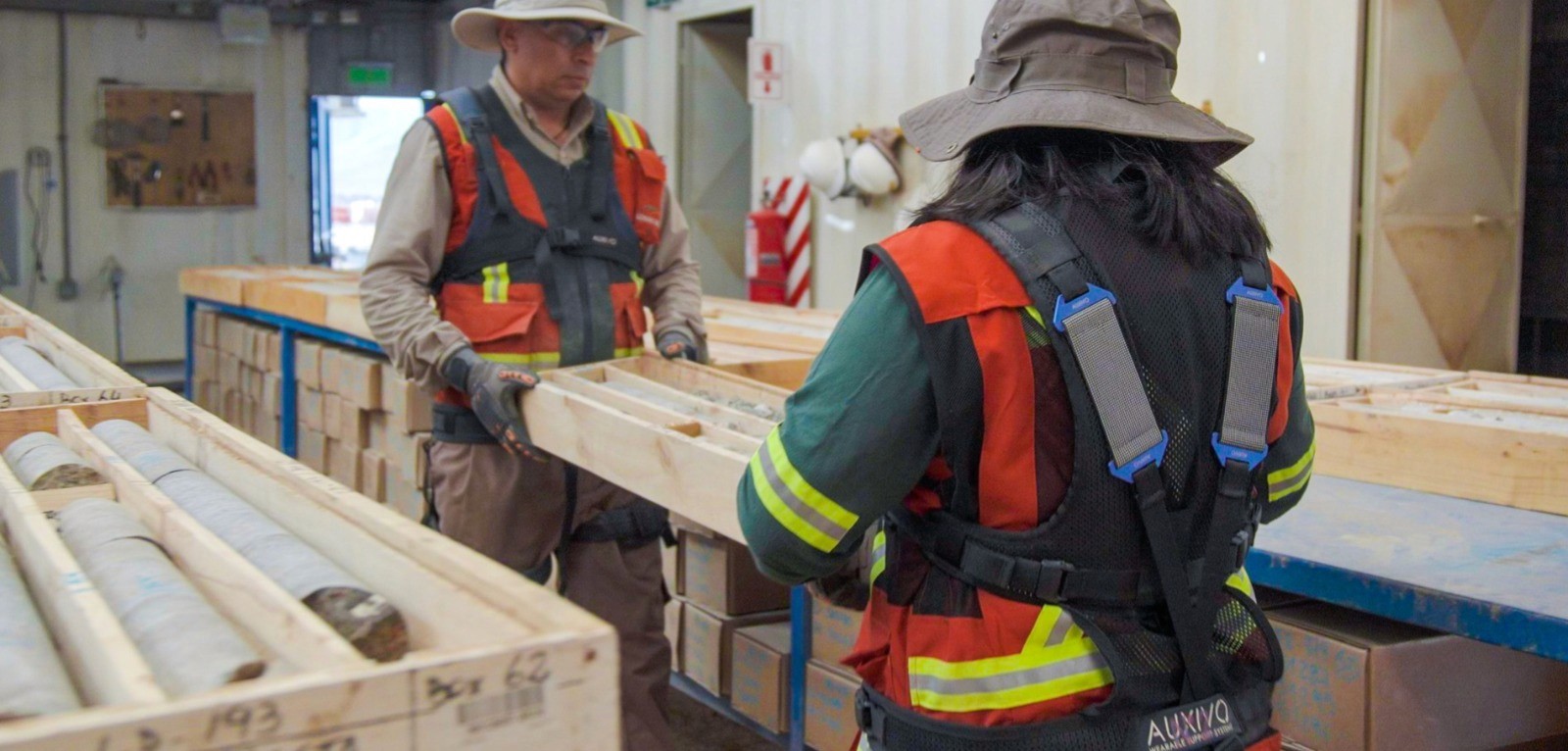
Reduce fatigue and MSDs in mining environments with the LiftSuit, a lightweight lumbar exoskeleton that reduces back effort by up to 33%.